register_link

Blog Archives

Why I should regularly release singles

What you'll learn in this post:
  • Experts advise to release a song every 4-6 weeks
  • What the benefits of regular output are
  • Why it doesn't always have to be a brand new song
  • Why albums are still relevant too

Today, we show you how you can mix up your single-game, why regular output is more important than ever, and how streaming has drastically changed listening habits.

The age of singles has brought with it quite a few new challenges. In the past, artists might have released a new album every 2-3 years, but today, people expect a more frequent output. Many experts even suggest releasing something new every 4-6 weeks, which adds up to 8-13 songs per year, which is pretty much a whole album. Some artists these days even operate by releasing each song in an album as a single first, so the album later only becomes a collection of those singles.

The benefits

  • You always have music you can promote
  • The number of monthly listeners continues to grow or at least remains constant
  • You always pop up in the release radar of your listeners
  • The algorithms of the streaming services reward constant output
  • Every few weeks, you can pitch a new song for playlists
  • In a time where the general attention span is becoming shorter and shorter, the listeners won’t forget you so quickly
  • You need a smaller budget than you would for an album

Newcomers should definitely release a few singles first, have their profiles verified, and only then start thinking about a bigger project. After a long musical break, as well, you should start back up with a few singles first. But even established artists whose focus is on EPs and albums should regularly release new singles in between bigger projects. However, going off the radar for two years is something practically no one can afford to do these days.

Different singles

Not every artist can create a song every month that lives up to their creative standard. And that’s not necessarily a must; there are other ways to keep up the output.

  • Lead and follow-up single: Launch your album and increase your chances of getting into big playlists
  • Unused material: The best leftovers are perfect for a release in between projects
  • Alternative versions: Your fans will also appreciate acoustic, demo and live versions of your songs
  • Remixes: Have your songs remixed or bring in another artist and add them to your existing track.
  • Cover songs: Share your version of your favourite songs with the world.
  • You can also re-release a song as a single when it’s already been out. You can, for instance, add an alternative version or a remix, because according to the definition on Spotify and Apple Music, a single can include up to three tracks.

Promote your single

Even though less work and money go into making a single than an album, you should still give it your full attention and promote it accordingly.

  • Use pre-saves
  • Make sure that the song shows up in the release radar
  • Send your track to bloggers and the media
  • Shoot a video and set up a premiere for it

Albums are still relevant

Even though singles are becoming more and more important, albums and EPs are still relevant. With an album you can tell a bigger story around which you can build a campaign and which you can monetize, for instance, by selling merchandise.

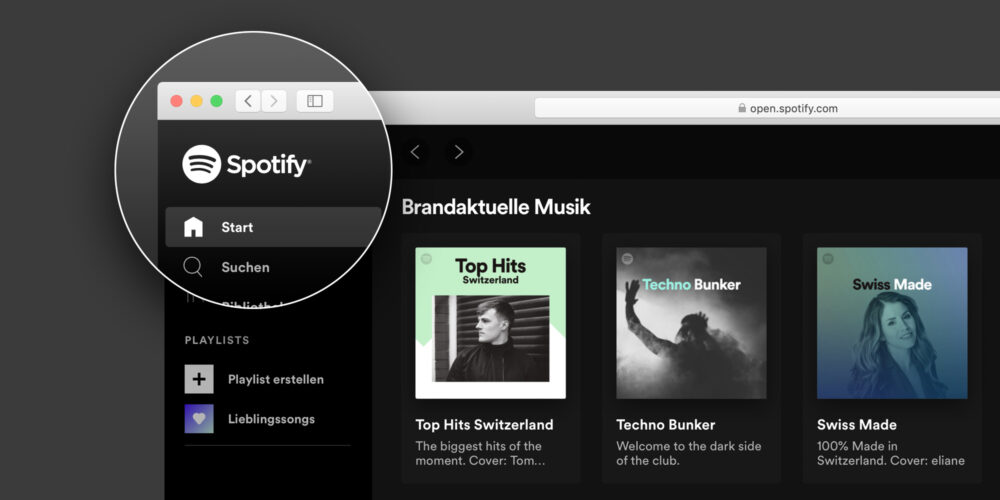
For many, albums continue to rank higher, among them the media. While streaming services may reward a big output, they, too, attach great value to albums. You can already notice this by the fact that on Spotify, albums are shown before singles.

Completing your team without a major budget

What you'll learn in this post:
  • Independent doesn't mean alone. But where do you find the right people?
  • Who you need in your team
  • On which platforms you find the right people

How do I complete my team if I don’t have all the necessary people in my social circle and can’t fall back on support from a label? On these platforms you are guaranteed to find what you need – no matter the budget!

If you want to move your career to the next level, you need a strong team behind you. Which positions need to be filled long term and which people you only work with on a freelance-basis is different for every artist. What’s certain is that ‘independent’ does not mean alone, and you’ll only make it to the top with the right people. But how do you find them? We have found a few platforms which will help you in your search.

To finish up your release, you need a recording engineer, someone in charge of mix and mastering, as well as a studio musician, if need be. On the business side of things, most artist have a management, a booking agent, as well as people who take care of marketing, PR, and social media. In the best case, you also work together with a music lawyer and have a fiduciary or an accountant at hand. You shouldn’t forget about graphic designers, photographers, and a video editor either.

Some of these positions require a great level of trust and should ideally lead to a long-term collaboration (manager, booking agent, marketing). When it comes to engineers, graphic designers or video editors, however, you can also shop around, compare different people, and try out new services. The following platforms can help you complete your team.

Soundbetter: We have already reported on this website multiple times before. It belongs to Spotify and shows you offers from musicians, producers, songwriters, as well as engineers and graphic designers for Canvas.

Another alternative that work in a similar way is AirGigs, where you can also get in touch with songwriters or graphic designers.

Experts for just about anything you can imagine can be found on Fiverr. You need an artwork, lyric video, Spotify Canvas, a press release, help with promotion, a 3D animation or are looking for a fitting engineer – it’s all there! The options are endless (thus quality and reliability might fluctuate), but with a little research you are guaranteed to find the right person. An alternative to that is Upwork.

All of the sites we mentioned have the benefit that the transaction is done via the platform and that the money will only be paid out upon completion of the job. If there are any disagreements, you can turn to the respective platform.

Another advantage is that you have access to talent from all over the world. An engineer from New York, the graphic design from Indonesia, Canvas from Nigeria? It’s all possible.

Secure revenue with correct metadata

What you'll learn in this post:
  • What exactly is summarized under the term metadata
  • Why metadata can also have an impact on your income
  • How to proceed to secure all revenues

Hardly any musician deals with the metadata of his songs. Yet these are not only a business card, but also contribute to the artist receiving all the income he is entitled to. We’ll explain why.

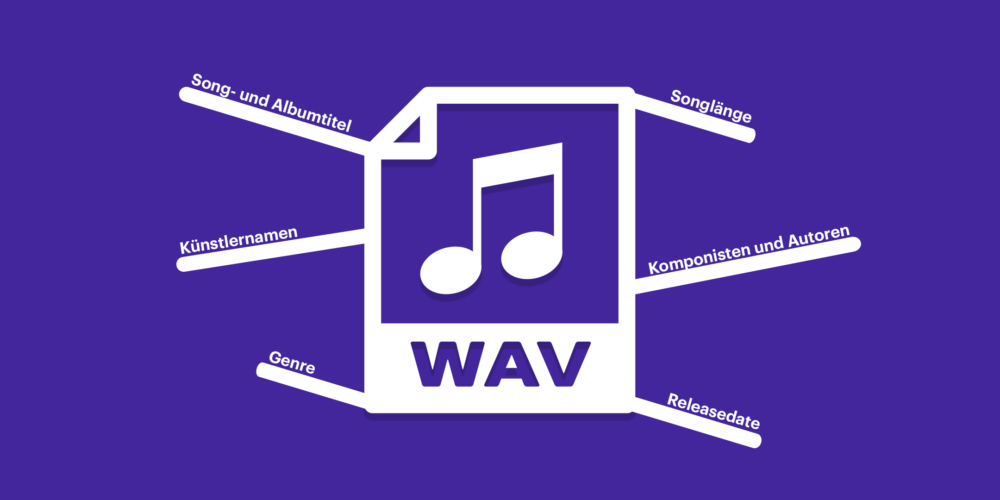
The term metadata may sound abstract, perhaps unimportant to many. But it is, as Spotify puts it, “fundamental to digital music.” Metadata includes artist name, song and album title, song length, composers and authors, genre or release date, to name a few. All important information that ensures a song is released correctly. But it’s much more than that – it also affects how musicians get paid.

Credits are not only a business card for artists, they also help ensure that you don’t miss out on revenue. Again, we quote Spotify:

“Correct metadata is essential to getting paid as a songwriter.”

If the metadata stored on Spotify and other DSPs does not match that of the collecting societies, there may be problems with the payment of royalties. It is believed that 25% of all royalties are not paid out at all or are paid out to the wrong people.

How to proceed?

The first step is to agree with all parties involved on who gets how many percentages for songwriting as well as composition / production. Once you have agreed on a split, it is put in writing. The next step is to register the song with the appropriate splits with the responsible collecting society.

Finally, you have to make sure that all credits, i.e. the metadata, have been completely and correctly recorded during distribution so that they are correctly deposited with all stores. This is important for the reason that the data sent to the collecting society must match the metadata of the release in order to receive its royalty payment.

This is also why stores and most distributors are required to file civil names with composers and lyricists. When registering with the collecting society, the civil names and not merely the artist names are also provided. These data must match in order to avoid complications.

You can find out how to record credits correctly on our blog.

More information about royalties will be available soon here at iGroove Magazine. Stay tuned!

Why was my song removed from Spotify?

What you'll learn in this post:
  • For what reasons songs are removed from Spotify
  • Why Spotify first removes the songs and only then informs
  • How to prevent the takedown of your songs

At the beginning of the year, Spotify deleted tens of thousands of songs. Why do such takedowns happen and how can you prevent your song from being removed?

At the beginning of the year, Spotify removed tens of thousands, rumors even say hundreds of thousands, of songs from the platform. Although it’s rare for so many songs to be taken down at once, such takedowns are nothing out of the ordinary. Spotify and other streaming services regularly remove tracks. We explain why this happens and what you can do about it.

If a song or release is removed from Spotify, it usually happens for the following two reasons:

  • Streaming fraud has been detected
  • There is a copyright infringement

Copyright infringement occurs, for example, when an artist uses a beat to which they do not own the rights, or uploads a feature with an artist who has not given their consent (or the label does not know about it).

In both cases your distributor will be informed but only after the song has already been taken down. The distributor has no influence on this. If your song has been blocked, your distributor will contact you and you will have to prove that no fraud has been committed. This is very difficult, because the burden of proof is completely on the artist.

The fact that action is primarily taken against artists is unfair in some cases. For example, if you fell for a supposedly legitimate offer, someone else bought streams for you, or the promotion company you hired messed up. However, Spotify acts according to the principle: Ignorance does not protect against punishment.

How to detect if a playlist is working with bots is explained in this blog post. Here we also show how to recognize fake streams.

If you can’t prove to Spotify that there is no fraud, the song will remain blocked and the streams identified as fraudulent will not be paid out.

How to prevent the takedown

  • Never buy a fixed number of streams
  • Be very careful when buying playlist placements
  • Check carefully if the promotion company you hire is reputable
  • Always double check that you have all the rights to a beat
  • Get written confirmation from the feature that the song may be released

iGroove is aware that there are many dubious offers that are not immediately recognizable as such. For this reason, we inform our artists immediately if we recognize suspicious streaming numbers, so that the promotion can be stopped immediately.

How do I set up Canvas for Spotify?

What you'll learn in this post:
  • Canvas only offers added value if the quality is right
  • The specifications at a glance
  • Tips for working with professionals as well as DIY

To make the most of out Spotify Canvas, you have to work with high-quality material and fresh ideas. Here, we have put together some input for you.

As we have reported before, more and more artists, including all iGroove artists, now have access to Spotify’s Canvas feature. But just because you have the option to upload 3-8 second loops for each of your songs, that alone won’t give you any added benefit. That can only be achieved if the videos are actually high-quality and creative. We’ve put together a few tips and tricks for you here.

Specifications

These are the requirements for an upload:

Aspect ratio9:16 (vertical)
HeightMinimum 720 px
Length3–8 sec.
Data formatOnly mp4 or jpg

In general, your creativity should know no bounds. The canvas can be a video or an animation, 2D or 3D. What’s important is, same as with music, that you have the rights to it.

Only work with professionals

The best approach to getting good results is to work with a designer. This way, you won’t just get a clip that stands out, you can also be sure it conforms to the necessary specifications.

If you don’t have a professional like that in your team, you can go to the platform Soundbetter, which is also part of Spotify, and which offers a new category where you can hire graphic designers, animators, and artists for Canvas designs.

DIY

The fastest option is to shoot the material yourself or to use a clip from the music video. Of course, you don’t normally shoot a music video for each song you make. Additionally, you should avoid having someone sing or rap in the clip, because it won’t be in sync with the song once it is looped and will only be distracting. Another option is to use freely available stock videos.

But how do you turn a horizontal clip, such as one from a music video, into a vertical one?

You can either use expensive software that is difficult to use for amateurs, or you can use a few tricks. This video explains how to use the free tools iMovie, Keynote, and Quicktime to rotate a video into a vertical one.

Another helpful tool is the Canvas Makerr.

Once you have the material ready, you can include it on Spotify for Artists.

The best time for social media posts

What you'll learn in this post:
  • Timing can determine whether your posts generate a lot of attention
  • What times of day and hours are best on Instagram, Facebook, Twitter and LinkedIn
  • How often to post on each platform

A new analysis shows on which days and at what time you should post on Instagram, Facebook, Twitter and LinkedIn. Create a strategy and reach more users with your posts!

Many factors determine whether you generate a lot of responses with your social media activity. One of them is timing. The experts at Blog2Social have analyzed over 60,000 channels and found out on which days and at what time you reach the most users. Since a post is only ever shown to a fraction of your followers, it pays to post when many users are online and you get more likes, comments and shares accordingly.

Instagram

Days: The best days are Monday, Thursday and especially Wednesday. The least suitable is the weekend, especially Sunday.

Time: Between 11:00 a.m. and 1:00 p.m., and from 7:00 p.m. – 9:00 p.m.

Frequency: One to two posts per day

Note: This does not refer to Stories or Reels. Stories should be posted daily.

Facebook

Days: All days except Monday and Wednesday. 

Time: Between 1:00pm and 4:00pm and from 6:00pm – 10:00pm. Most interactions occur between 3:00 p.m. – 4:00 p.m.

Frequency: Two posts daily

Note: On weekends, the best time is between 13:00 – 16:00.

Twitter

Days: Monday to Friday 

Time: From 08:00 – 10:00, between 11:00 and 13:00, and from 17:00 to 18:00. Most interactions occur between 12:00 and 13:00.

Frequency: Three tweets per day

Note: It is best to post during work hours, so weekends are less suitable.  The “lifetime” of a tweet is only about 20 minutes before it sinks into your contacts’ timelines.

LinkedIn

Days: Tuesday to Thursday 

Time: From 08:00 – 10:00 and between 17:00 and 18:00.

Frequency: One post per day

Note: LinkedIn is used significantly less outside of office hours and on weekends. 

Why LinkedIn?

LinkedIn describes itself as a “professional community.” If you’re an independent artist or a music manager, music is your business. You won’t necessarily gain new fans on LinkedIn, but it’s perfect for networking.

  • Find people to join your team or other musicians to collaborate with.
  • Network in industry groups and share ideas.
  • Show your professional business side and point out your past musical successes.
  • Use LinkedIn for promotion: 61% of users are between 24-35 years old. Ads can help you reach the right target audience, which is also different from other platforms.

To reach more users in the long run, you should regularly consult the analytics tools of the social media apps. With these, you can find out when your followers are online most often and set the strategy for your posts accordingly.

Efficient advertising with re-marketing

What you'll learn in this post:
  • Why re-marketing is ideal for a long-term strategy
  • How re-marketing works exactly and what the advantages are
  • How you can use re-marketing on Facebook / Instagram, GoogleAdwords and YouTube

To use your advertising budget in a targeted and cost-effective way, it pays to work with re-marketing lists and build a long-term strategy.

A good advertising strategy contributes significantly to advancing your career and generating more attention. However, it is an unwritten law that in the short term you always put in more than you get out. In order for the invested costs to pay off, the newly reached fans have to buy and stream several products of yours, attend concerts, buy merch, share videos or recommend your music to others. For a long-term strategy, re-marketing is the way to go.

Re-marketing involves identifying people who are interested in your music. For example, they have watched a video of yours, visited your website or viewed an advertisement on Insta. These people are stored in a so-called re-marketing list and can then be targeted for advertising. 

A good example is Zalando: once you’ve watched one of their products, it seems to follow you everywhere afterwards.

This is also possible for musicians and it seems like there is a huge campaign behind it. However, the trick is that the ads are only shown to people who have already shown interest in you. This means that there is practically no wastage, which makes the advertising very cheap and efficient. 

Without re-marketing, you reach more different people, but this does not guarantee greater success.

Re-marketing lists can be created and used on the following platforms, for example:

  • Facebook / Instagram
  • GoogleAdwords
  • YouTube

For Google and Facebook / Instagram, you need to generate a so-called re-marketing tag and integrate it on all the artist’s web pages. For YouTube you have to connect your channel with your Adwords account.

Facebook and Instagram  

Depending on the campaign, it is worth targeting people on Facebook and Instagram who have already shown an interest in your music. These can be identified by means of the Facebook Pixel. The people identified in this way can be narrowed down even more precisely on the basis of their actions on your website or app, allowing you to tailor the target group optimally and minimize wastage.

YouTube

On YouTube, you can advertise your music video for a fee. Your clip is displayed before the video starts, which the user actually wanted to watch. The user has the option to skip the video advertisement after three seconds. In this case, YouTube does not charge for the ad, you only pay for broadcasts that have attracted interest. Every video that has been watched for more than 30 seconds counts as a view.

With iGroove’s YouTube advertising, re-marketing is included. Even after the YouTube campaign, the re-marketing list remains, so you can also promote other products (e.g. concert tickets, merchandise, etc.) at a later date.

More information here.

How do I get a blue checkmark on SoundCloud?

What you'll learn in this post:
  • Who is eligible for the blue hook at all
  • How to apply for it in a few steps

Recently, SoundCloud, too, has introduced verified profiles, which can be spotted by the blue checkmark next to the artist’s name. Here, we show you how to proceed to get it.

The blue checkmark is popular just about everywhere it’s available. Now, verification is also possible on SoundCloud. Even though it might not be the platform where you rake in the big bucks (although monetization options are available now), SoundCloud continues to be a launch pad from which many a career takes off. So, if you’re active on SoundCloud, you should secure yourself a verification.

Who gets the blue checkmark on SoundCloud?

According to SoundCloud, blue checkmarks are given to artists, collectives, DJs, labels, curators or podcasters who are either famous or often searched.

Of course, it has to be the official channel of the artist/label, not a fan account. Additionally, they need a bio and profile photo and must have uploaded at least one track. Plus, the channel cannot contain any misleading information.

How do I apply for the blue checkmark on SoundCloud?

To ask for a blue checkmark, go to your settings and click on “Request Verification.” You will be asked to fill out your stage name and have the option to list the links to your social media profiles, press articles, etc. which will make the review process easier for SoundCloud.

The review can take up to 30 days – with Pro Unlimited subscribers being prioritized. However, the request is no guarantee that you will actually receive the blue checkmark. If you change your stage name, chances are you’ll have to ask for a blue checkmark again.

Which streaming service has the most listeners and songs?

What you'll learn in this post:
  • Which streaming service has the most paying listeners and which has the most active listeners
  • Which streaming service offers the most tracks

Which streaming service can reach the most listeners and which one has the biggest track selection? We have the numbers and answers.

We’ve probably all read countless articles about which streaming service is supposedly the most important and which is growing the fastest. But which one actually has the edge over the rest when it comes to sheer numbers? We wanted to know the specifics and will show you the analysis here.

The most listeners

When it comes to paying users, Spotify clearly has the edge with exactly double the amount of listeners that the runner-up, Apple Music, reports. Below that, you will find Amazon Music, QQ Music, YouTube, and Deezer.

When it comes to the total active users, including those with a free subscription, Spotify is only beaten by QQ Music, a Chinese provider that is part of Tencent.

Streaming providerPaying listenersTotal active listeners
Spotify144 million320 million
Apple Music72 million72 million
Amazon Music55 million55 million
QQ Music42,7 million657 million
YouTube Music30 million30 million
Deezer7 million16 million
Pandora6,4 million58,6 million
Tidal3 million3 million
Gaana2 million150 million

The most songs

Now we know which streaming service has the most listeners, but where can you find the biggest selection of music? If we count Soundcloud as a streaming service, it is clearly the one offering the highest number of tracks, which, of course, is also due to the fact that musicians can upload their tracks themselves there. With a significant gap, Apple Music and Tidal then follow behind with 70 million tracks, as well as Spotify and Amazon Music with 60 million songs each.

Update: Deezer has informed us that they have recently expanded the number of songs from 56 million to 73 million. Of these, 70 million are also available in FLAC audio format (CD quality).

Streaming providerNumber of tracks
Soundcloud190 million
Deezer73 million
Apple Music70 million
Tidal70 million
Spotify60 million
Amazon Music60 million
Qobuz60 million
YouTube Music50 million
Gaana45 million
KKBOX40 million

With iGroove you can submit your songs to all of the streaming services listed above, with the exception of the Indian provider Gaana, KKBOX from Taiwan, and Soundcloud.

More info can be found here.

What’s the best time of the year to release my album?

What you'll learn in this post:
  • Which months are best for your release
  • Detailed pros and cons for each month

The right timing can be crucial. So think carefully about when you want to release your album so that it gets the attention it deserves.

The new year is just around the corner and maybe you’re already planning your releases for 2021. Especially as an independent artist, you’re competing with countless other artists for the attention of listeners and media. The right timing can therefore give you an advantage. We’ll show you which months are best and which you should avoid.

January / February

Two good months for independent artists. The holiday rush is over and there are fewer releases from major artists. Advantageous from mid-January, when definitely everyone has overcome the New Year’s hangover. The first two weeks are recommended only if you want to bet on the fact that there is not much else going on.

March – June

In normal times, the festival season is coming up and the first open airs are taking place. Accordingly, many releases appear at this time. Despite emerging competition, this is a good time in which to get the attention you deserve.

July / August

These months and partly already June were once considered the summer slump. Many people are on vacation, so they used to be absent from record stores. In the streaming age, this is not as important anymore. Nevertheless, with vacations and festivals, the focus is often not necessarily on new releases. An advantage, on the other hand, is that the competition is smaller, since many artists still avoid these months.

September / October

Generally a good time. Most of the decision makers in the music industry and media world are back from summer vacation and ready for new music. But the competition is getting bigger and there are more major releases than during the summer months.

November / December

Many major releases come out in the 4th quarter not to mention all the Christmas songs. The competition is huge and it’s therefore rather not advisable to release at the end of the year. This is also reflected in the airplay, because the playlists of the radios are packed and also the focus is more on annual reviews than new releases. If this is still the right season for your release, by all means release before December 15th, unless of course you’ve recorded a Christmas album.

  • This applies to albums and EPs. Singles should be released regularly throughout the year.
  • Be aware of holidays and other events throughout the year that can distract listeners and media in your main market.
  • Try to avoid releasing on the same day as artists who make similar music
  • If your focus is on concerts (hopefully again in 2021), then align the album release with your tour schedule
  • The mood has to fit the season. An album full of sad songs doesn’t fit July and the party album doesn’t fit the foggy November.

How do I get the Official Artist Channel on YouTube?

What you'll learn in this post:
  • What the Official Artist Channel (OAC) exactly is
  • What advantages the OAC offers musicians
  • What the requirements are to obtain verification
  • How iGroove can help you

There are very high requirements to get verified on YouTube. Only channels with at least 100,000 subscribers are considered. Fortunately, there is an easier way for musicians to be verified, namely the Official Artist Channel (OAC), which can be recognized by the music note next to the artist name.

What is an Official Artist Channel?

The OAC bundles all your videos, albums and singles in one place. Instead of a YouTube and a topic channel, you only have the OAC. The topic channel contains all the songs you uploaded to YouTube Music as art tracks (audio plus cover).

This makes it easier for your fans to find the right channel and follow it plus they stay longer because there is more content. Thanks to the music note, it’s immediately clear which is your channel and which are just fan accounts.

What are the benefits?

  • The channel is easier to find and thus generates more traffic
  • The videos and art tracks are sorted and presented clearly
  • You can edit the profile (picture and bio) – also for YouTube Music.
  • Access to analytics data that shows which videos or songs perform best or where your music is consumed the most
  • Promotion: define what you want to highlight on the profile home page.

Just like regular verification, there are no additional bonus features with the OAC.

What are the requirements?

All you need is a YouTube channel running under your artist name and at least three releases that have been delivered to YouTube. In addition, there must be no policy violations on your channel.

In addition, at least one of these points must be met:

  • You work with a YouTube partner manager
  • You participate in the YouTube Partner Program yourself
  • Your channel is part of a label network that works with a partner manager

How do I get the Official Artist Channel?

The easiest way to do this is through your distributor. At iGroove you can simply contact our support and send the following information:

  • Link to your YouTube channel
  • Link to your topic channel
  • Links to three art tracks

It is an advantage if the name of the YouTube channel and the topic channel match. Now all you need is a little patience, as the verification process can take several weeks.

How to identify fake playlists

What you'll learn in this post:
  • What you should check before booking a promotion
  • Which factors indicate fraud
  • Which tools are helpful

How do I know if a playlist is serious and thus a placement creates additional reach? We’ll show you how to find out in advance whether a playlist works primarily with bots.

Many artists want to boost their streams, but are unsure if the offers are serious. We have already mentioned it several times, but we like to say it again: NEVER buy a fixed number of streams! Bot streams don’t generate followers or real fans who attend your concerts or buy your merch. But what about playlist placements? Again, it’s important to look closely.

Check the playlist before you book

First, take a close look at the playlist and its curator:

  • Does the playlist only feature unknown artists but has a lot of followers?
  • Are some artists represented with multiple songs in the playlist?
  • Are the same artists in multiple playlists of the curator?
  • Does the curator have multiple playlists that all have roughly the same number of followers?
  • Does the curator have large playlists but hardly any followers himself?
  • Do the curator’s followers have weird, often similar names and often no profile picture?

These are factors where at least some skepticism is reasonable.

In a second step, you should analyze the profiles of the artists that are currently on top of the playlist:

A comparison between monthly listeners and the top 5 cities is particularly useful. Evaluations show that the top 5 cities represent no more than 10% of total listeners. If the number is higher, there is a high probability that bots are involved. You should also check whether smaller cities generate a disproportionate number of streams.

If you are still not sure, you can do the following tests:

The curator doesn’t want to hear your song before adding it to the playlist? Then it’s all about the money and therefore the playlist is probably fake. If he wants to hear the song first, you can do a another test, but it involves a certain risk: send him your worst track in lousy sound quality. If he accepts it anyway, you have to be skeptical.

Check the curator’s social media presence. If he has many followers but hardly any likes, it smells like fraud. If he is cheating on social media, then probably also with his playlist.

If you have access to tools such as Chartmetric, you should check the development of the playlist’s followers. If the number of followers has increased dramatically, you should assume that fake followers have been bought.

If you have already booked the playlist, you can check the following, as already described here, using Spotify for Artists and your distributor’s insights:

  • Streams / Saves ratio (Saves should not be less than 3%)
  • Ratio streams / number of listeners of the song (ratio should be between 40-60%, i.e. about twice as many streams as listeners)
  • Ratio desktop / mobile (more desktop is suspicious)
  • Ratio Free / Premium (more free streams is suspicious)
  • Analyze the origin of the streams as well

As an iGroove customer, you’ll automatically receive a warning if the streaming numbers are suspicious so that you can end the booked service early and the song won’t be removed by the streaming providers.

Conclusion: Many offers seem legitimate, but most of them aren’t. If you buy into fake playlists, the damage is much greater than the benefit.