register_link

Blog Archives

How do I pitch my music to blogs and media outlets?

What you'll learn in this post:
  • Why media and blogs are still relevant in the age of social media and playlists
  • How to build your media list
  • Why you should personalize your pitch and what should definitely not be missing

Nowadays, most discussions about music are taking place on social media and most listeners discover new music through playlists. Nevertheless, you shouldn’t write off blogs and traditional media outlets prematurely. Curators, A&Rs, and other tastemakers continue to use blogs and media outlets to discover new artists, and there are also a lot of fans who could come in contact with your music in this way. Articles can help establish a connection with the fans, reveal more about the artist as a person, and attract more new listeners.

You should therefore never miss out on sending your new releases to bloggers and journalists. If you don’t have the budget for a PR agency or would rather take things into your own hands, there are a few things to keep in mind. What’s certain is that music journalists and bloggers receive dozens, if not hundreds, of e-mails. This means you need to stand out from the crowd – everybody hates spam, so you shouldn’t send out any either.

Putting together a media list

Before you can start, you need to know who you actually want to contact. Instead of buying a list of media contacts online, most of which won’t be a good fit, you should put together a handpicked list yourself. If you’re a rap artist, there is no point in writing to blogs specializing in electro or rock music. That’s why it’s better to get in touch with only 20 media outlets that actually fit your style, instead of wasting your (and everybody else’s) time.

Once you have your list put together, you need to find out how the outlets in question like to receive their submissions. Some list their e-mail address, others upload a form or use external platforms. Make sure to actually follow these submission guidelines!

When is the right time for a pitch?

Journalists like to have information in advance. So, it’s best to send them your pitch before the release. Keep deadlines in mind: Bloggers are flexible, but print journalists (especially if their publications only appear weekly or once a month) obviously less so.

Personalize your pitch

Now it’s time to send those e-mails. First rule: Send out a personalized message! That’s more work, but you’ll stand out from the crowd and you’re showing the journalist that you are genuinely interested in their project. Include something that lets the recipient know immediately that you’ve really researched their medium. If you don’t have enough time, pick 10-20 of the most important media outlets and spend time crafting personalized messages for them, while the rest can receive a more general e-mail. Should you not receive an answer (chances are high that you won’t), ask for constructive feedback, but don’t send more than one reminder.

Get to the point!

What’s really important is that the e-mail clearly states from the start what exactly it is that you want from the journalist/blogger. Would they be posting a track, are we talking about a video, do you want to get into a playlist or a certain column or are you asking for an interview? Are you perhaps even interested in having the blog launch the premiere of your song/video? Of course, you shouldn’t suggest a premiere to everyone in your e-mailing list – only those media outlets that you really want to be featured in.

The first thing the journalist sees is obviously the subject line. So, take time to come up with an eye-catching headline (mentioning your stage name and genre would not be amiss). The content of the e-mail should be kept short. Briefly introduce yourself and your release, mention important information like the release date, features, and a selection of past highlights. Also add a picture to the text. Everything else belongs in the EPK. You’ll find out what all is included there here.

Your social media content strategy

What you'll learn in this post:
  • Why you as an artist should not only post about your music
  • How to develop a strategy and position yourself as an artist
  • Why you should define 3-5 topics that you cover regularly

As a musician, music is often the only thing on your mind. Consequently, the focus of your social media posts will be your music also – especially since you’re using those platforms to reach more potential listeners. But precisely for this reason that we utilize social media as a marketing tool, it might be good to follow some marketing principles, as well. One of them is not to fixate on just one topic.

Define topics and strategy

This means that you must have a clear definition of your brand, which is who you are as an artist. In many areas, social media requires a strategy and a clear position. The fans should be able to identify themselves with you and this usually happens beyond the scope of just music. That’s why you should consider how you want to present yourself as an artist to the public and think about some topics that could be of interest to both you and your fans 

If you’re only ever talking about your music and are thus essentially always trying to sell your product, it gives off a very one-dimensional and self-centered impression. People aren’t just interested in your music but also in the person behind it and why you are making this music. But, of course, you also shouldn’t just ramble on about a bunch of random topics. If you’re talking about music one day, and the next day you’re discussing the military coup in Myanmar, and the day after that the subject is cars, it will seem like you don’t have a concept.

3-5 topics for your strategy

Experts recommend choosing 3-5 topics. The obvious one is music-related themes, such as new releases, music videos, and behind-the-scenes material, as well as the promotion of merch, concerts or livestreams. On top of that, you should consider 2 or 3 additional topics that you are knowledgeable in, that you have passion for, and that you want to speak about in public.

One person might be comfortable sharing their private life, the other is involved in local politics, and the third loves to talk about soccer or their pet. Of course, this doesn’t mean that you have to keep discussing the same topics year after year. On the contrary, every once in a while, you should re-evaluate whether these are still the right ones for you. After all, everybody’s interests will always evolve, so you should keep re-inventing your content accordingly.

The focus changes continuously

Likewise, you’ll need to constantly reorganize your prioritization. When there’s a new release coming up, you’ll naturally post more about the music. When there isn’t, other topics can come to the fore. If possible, you might also want to slightly shift the thematic focus depending on the platform.

Knowing the core topics also helps you develop concrete marketing strategies for an upcoming release and identify which resources you’ll need to promote it.

The most accurate sales trends in the music industry

What you'll learn in this post:
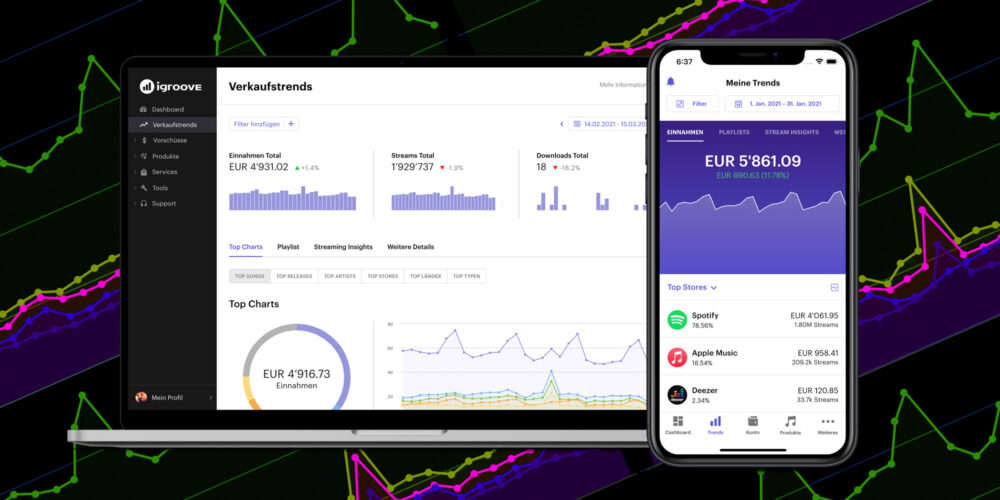
  • Thanks to our artificial intelligence Muse, iGroove's trend data is more accurate than ever before
  • So you already know much more precisely what you will receive in the future
  • On the iGroove app you can see how much your next three payouts will be plus the forecasts for the next 6,12 and 24 months

Sales trends give you a preview of the amount being credited to account in your future. iGroove has updated this feature and can now offer the most accurate trend data to tell you well in advance exactly how much money you will receive and when it will be at your disposal.

Many distributors provide artists with so-called sales trends. These trends give an overview on streams and sales before accounts are balanced with the streaming services. They offer artists a point of reference on where they stand approximately. The reason why nonetheless the actual payout might deviate from these numbers is that while streaming services disclose to distributors the number of streams, the type of subscription, and where the streams come from, they do not specify the monetary amount.

Essentially, all distributors (including iGroove) calculate the amount of money garnered from a stream based on previous numbers. But this didn’t cut it for us – we wanted to offer our artists the most accurate trends in the game. Thanks to our Artificial Intelligence “Muse,” we can already predict future revenues with precision, so we decided to use it for the trends, as well. Thus, we can now tell exactly how much Spotify pays, for instance, for a stream from Brazil that was generated by a family subscription.

What has changed for you?

Precision has improved greatly once again, so you can know much more accurately today what you will earn in the future. When it comes to the most important services like Spotify, Apple Music, or Deezer, the precision is more than 98%. Unfortunately, some other services like Amazon, for example, do not yet provide trend data about their streams. But as soon as they are available, we will include them, as well. Our goal is to tell you in advance exactly how much money you will receive and when it will be at your disposal.

Preview & Forecasts

The new iGroove app also shows you how high your future payouts will be. That way you know at all times how much will be credited to your bank account in the coming months and can plan better for the future. The app also gives you a projection of your revenues in the next 6, 12, and even 24 months.

If you still have questions about the sales trends, the app or the forecasts of your future revenues, feel free to contact our support.

All further information can be found on www.igroovemusic.com.

Make the most out of your YouTube channel

What you'll learn in this post:
  • What adjustments you can make to present your channel in the best possible way
  • What tricks there are when uploading the videos to increase the reach
  • How the algorithm of YouTube works

Videos are one of the most important tools for marketing music, be it on TikTok, Instagram, or Triller. But the top dog of video platforms is still, by far, YouTube, with its 2 billion users logging on every month (not even counting those without a Google account).

In another one of our posts, we explained why you shouldn’t put all your eggs in YouTube’s basket. Nevertheless, a strong presence on the world’s biggest video platform is absolutely indispensable.

Clean up your YouTube channel

To start off, you might want to do some spring cleaning: As an artist you should set up an Official Artist Channel so that all your content is in one spot. We already discussed this feature in another post. Once you have your OAC, you should optimize your profile. That’s your calling card, which should leave a good impression on any visitor, so that they’ll want to linger on.

Make the following customizations:

  • Pick a name for your channel
  • Upload your profile picture and banner
  • Fill out the basic info
  • Put in the links to your website, social media accounts, etc.
  • Add the links to the channels/accounts for your other projects, your label, etc.
  • Sort your videos into different sections, to which you can add videos, playlists, or videos from other users, too
  • Adjust the URL of your channel

When uploading a video, there are a few things to consider, as well:

  • Pick a nice thumbnail
  • Write a good description, so that it’s easier for people to find the video, and include all the important information and links
  • Add cards which take viewers to another video or to your channel
  • Add your channel logo as a watermark so viewers can go to your channel and subscribe to it
  • Add an intro which you can use as a personal trademark on multiple videos
  • Add an end card with a call to action (this can be used for multiple videos, as well)
  • Upload the video in HD (720p or 1080p) for a professional look
  • Don’t forget to use tags and list the right keywords
  • Put your video in a playlist so that viewers can immediately be directed to other videos

Am I a youtuber?

First, we must differentiate between artists who use YouTube and upload their videos there and youtubers. The latter upload not just once every 1-2 months, but often multiple times a week. How frequently you want to post is, of course, completely up to you. What’s certain is that YouTube’s algorithm favors channels with lots of uploads when it comes to recommendations as well as monetization. But how can I manage to regularly upload content?

You can use YouTube as a storage medium for your videos, or you can view it as a social media platform, which means that you regularly upload new content. But what should that content be when you can’t exactly produce a new music video every week? We’ve come up with a few options:

  • Videos from live concerts (past recordings, for the time being)
  • Lyric videos (popular and definitely cheaper than a music video)
  • Vlogs: Use them to give a glimpse behind the scenes
  • Q&A: Go live and answer questions from fans
  • Virtual concerts: An obvious way to use YouTube
  • Cover songs
  • Advertisements: Present your new merch and tell people about your upcoming album, deluxe edition, or box set
  • Tutorials: A great opportunity, especially for producers, to show people the newest available tools
  • UGC: Put up videos made by your fans (user generated content) on your channel, as well

For some of these videos, other platforms might arguably be more suitable – it mainly depends on where you have the biggest community of fans.

How does YouTube’s algorithm work?

Obviously, a behind-the-scenes video won’t generate as many clicks as an elaborate music video. But do videos with fewer views have a negative impact on the algorithm? According to YouTube, that is not the case, since every video is assessed individually. The goal is to recommend videos that users want to see. Otherwise, it wouldn’t be possible for a video to go viral when the previous clips from the channel only had a few views.

The algorithm pays attention to how users react to a video. The more people interact positively with a video, the more that video will be recommended to others. Frequent uploads are rewarded, although you should keep in mind that subscribers only get a maximum of three notifications from the same channel per day. So, it’s not recommended to post more than three times daily. It also has a positive influence on the algorithm when users are taken to YouTube from other platforms. But what’s most important is the user engagement on YouTube itself.

Like any other social media platform, it’s well worth studying YouTube’s Analytics, as well, and learn more about user behaviour. That way, you can find out how users come across your videos and get information on the age and gender of your viewers.

You shouldn’t just measure success based on views. What’s also important is how many people watched the video until the end. A sustainable channel is marked primarily through a steady growth of subscribers.

Monetize your videos

Thanks to the Content ID, you can monetize not only your own videos but all videos that use your music. Many distributors, including iGroove, offer monetization via Content ID.

Another source of revenue are Art Tracks, which are available on YouTube when you submit your music to YouTube Music.

Want to increase your views? iGroove offers efficient pre-roll ads for your videos.

Finance your release using crowdfunding

What you'll learn in this post:
  • What you should consider before crowdfunding
  • How to present your crowdfunding optimally
  • How to promote the crowdfunding

You have new music but lack the budget? Using crowdfunding you can have your project directly financed by your fans.

We are now in the second year of the pandemic, and budgets are getting tighter and tighter. At the same time, there is more time to create new music for new releases. One way to make up for this imbalance between available material and lacking finances is crowdfunding. We’ll show you how to proceed if you want to have your release financed by your fans.

Budget and planning

First, you should put together the budget for your release, so you know how much money you have to raise. The second step is then to decide which of the numerous crowdfunding platforms to use. Find out which one best meets your requirements and offers you the ideal terms and conditions. What’s also important is to make it as easy as possible for your fans (e. g. do they have to register on the website first, what payment options are available to them, etc.).

Presentation and packages

Finally, you have to ask yourself the following two questions:

  • How do I present my project?
  • Which options do I offer my fans?

The presentation should show what project the fans are supporting and how the money will be used. Briefly and concisely introduce your album and tell people how you will allocate the budget. Apart from a short text, you might also want to put up a video explaining the most important things and getting people excited.

While a lot of fans will only be willing to chip in a few dollars, there are also die-hard fans who will contribute a larger amount. That’s why you should put together different packages. While for smaller packages someone might only get a digital download or a CD, you’ll need a few goodies for the more expensive ones. Those could include vinyl, merch, meet & greets, albums from your back catalogue, or an exclusive live-stream concert. 80% of the money usually comes from only 20% of supporters – so, big packages are extremely important.

Promote your crowdfunding

Now, of course, you should ideally reach every single potential funder. Use your e-mail list and especially all your social media channels. In order to reach as many people as possible, you’ll have to invest in advertising, which should already be included in your budget calculations, as well. Naturally, a fundraiser like this can only be successful if you already have a solid fanbase.

When you’ve reached your goal and all the funds have been raised, your work is not quite done yet. Now it’s time to keep your supporters updated and deliver the promised goodies on time. You should neither disappoint long-time fans nor discourage newly acquired followers.

Advance instead of crowdfunding

You don’t think crowdfunding is your thing or only expect it to cover a part of your needed budget? At iGroove, you can request an advance payment on your release. Get your free and nonbinding offer today and additionally receive a projection of your future revenues. More information here.

SoundCloud introduces user-centric distribution model

What you'll learn in this post:
  • SoundCloud ventures to switch from pro rata to user centric
  • However, this applies only to a part of the artists
  • How streaming revenues will now be distributed

We’ve already reported on the rumor that SoundCloud might be the first streaming service to switch from the pro-rata to the user-centric distribution model. Now, this has become reality – at least in part.

While in the pro-rata model all streams are thrown into one big pot, the user-centric model distributes the revenues from each user only to those artists that they actually listened to.

The change will take place on April 1st, but the new model will only be used for artists who upload their music directly via SoundCloud. To be precise, that includes 100,000 customers who use SoundCloud Premier, Repost by SoundCloud, or Repost Select. But these three features are not free of charge – so, to be part of the user-centric model, you have to be a paying member of SoundCloud.

How does SoundCloud calculate the payout?

The share, that the artist receives, is calculated based on the time that a user listened to said artist in comparison to the total listening time per month. What also plays a part is how many ads the user listens to on the platform or if they are paying for SoundCloud Go+.

But there are still some questions that SoundCloud has, as of yet, left unanswered.

One of them is whether the user-centric model will be applied for publishing, as well, meaning whether it will be applied to the shares of the songwriters and composers. For another, it’s still unclear how the revenues will be calculated when a user listens to music both from artists who upload directly (user-centric), as well as from label/distributor submissions (pro-rata).

User Centric: Advantages for artists?

Since so far no big streaming service could bring itself to change its distribution model, we will now see for the first time whether this system can actually bring benefits for independent musicians. But the cake that’s to be divided is still relatively manageable: In 2019 (there are no new numbers available yet), SoundCloud made a profit of 99.5 million dollars from ads and user subscriptions.

Whether other streaming services will make the switch is still written in the stars and heavily depends on the major labels. Since these labels show themselves to be open only to conversations but nothing more, it is not to be expected that anything will change in this regard anytime soon. But thanks to SoundCloud, we will now at least get an idea of whether a system change is even desirable from a musician’s perspective. 

Spotify to soon become the biggest podcast platform?

What you'll learn in this post:
  • According to forecasts, Spotify will replace Apple at the top this year
  • Spotify is also expected to grow significantly faster than Apple in the coming years
  • How many Spotify users consume podcasts

According to one projection, Spotify will soon be not only the biggest streaming platform, but also the number 1 in podcasts.

We’ve already mentioned in multiple posts that Spotify is placing a big focus on podcasts and investing huge sums into this area. There were many critical voices who thought that these big investments were not paying off and that they were bringing in too few new users.

The newest projection, however, shows that Spotify will replace Apple on that number 1 spot this year already.

According to this projection, Spotify could increase their numbers in the USA to 28.2 million users (in 2020: 19.9 million), while Apple will only experience a minimal growth from 27.6 million to 28 million. In the two years after that, Spotify is predicted to experience an even bigger surge: up to 33,1 (2022) and 37.5 million (2023). In comparison, Apple will supposedly only grow at a very slow pace and reach 28.8 million users by 2023.

This, of course, means that a significantly bigger slice of the ad cake will go to Spotify. According to the aforementioned study, this cake will be worth 1.28 billion dollars in the U.S. alone.

Additionally, there are rumors circulating, as they do every so often, that Spotify is drawing up a separate subscription plan for podcasts. Whether this will be well-received by the listeners is a question on which opinions differ greatly.

At the moment, 25% of Spotify users listen to podcasts, which corresponds to around 86 million people worldwide.

The study predicts that in 2021, 117.8 million users in the U.S. will consume podcasts monthly. Almost a quarter of them listen to podcasts on Spotify.

How many artists actually make bank on Spotify?

What you'll learn in this post:
  • There are 8 million artists on Spotify, but only 57k account for 90% of all streams
  • 800 artists receive 20% of all payouts from Spotify
  • Only 7,500 artists earn more than 100k per year through Spotify

Based on the newest numbers there are 60,000 songs being uploaded to Spotify every day. That’s almost 22 million tracks per year. A study has shown that of these, 1.2 million songs were released through major labels. DIY artists released 9.5 million tracks, meaning eight times as many. The remaining 11 million songs are covered by independent labels. But most of these songs drown in the flood of new music – because only a fraction of artists actually make bank.

57,000 artists account for 90% of streams

According to Spotify, there are 8 million artists on the platform who released a total of 1.8 million albums (including singles, they make up the aforementioned 22 million tracks). But out of these 8 million artists, only 57,000 are responsible for 90% of all streams on Spotify. That may sound like a small number, but it’s four times as many as it was six years ago. Spotify projects this number to go up to around 100,000 by 2023.

800 artists receive 20% of the total revenue

As of the status quo, it’s 0.7% of artists who rake in 90% of the revenues. At their “Stream On” event in 2020, Spotify announced that they paid out more than $5 billion. 4.5 billion therefore went to only 57,000 artists (or rather, their labels), which on average equals $79,000 per artist. But even among this this 0.7% elite there are massive differences: 800 artists received $1 million or more and 7,500 artists made over $100,000.

So, even in the top elite there are around 49,000 artists who made less than $100,000 per year, while only 0.1% of all artists made six figures. At the same time, a total of 800 artists received around 20% of the total payout.

The numbers emphasize why more and more artists are demanding a change in the way revenues are distributed. What such a system change can look like will be regularly covered in our iGroove magazine.

Spotify expands to more than 80 additional countries

What you'll learn in this post:
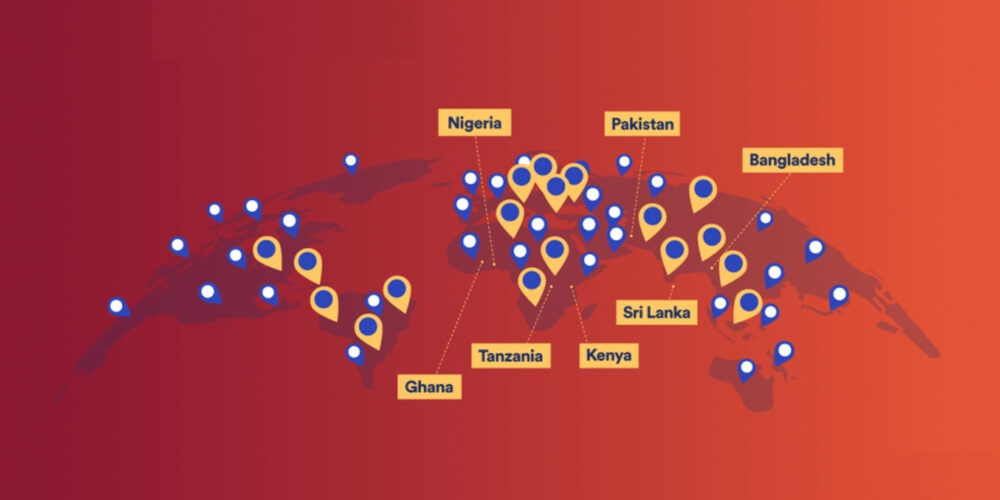
  • Spotify expands to over 80 new countries, mainly in Africa, Asia and the Caribbean
  • These countries have more than a billion inhabitants, so we can expect a lot of new users
  • Spotify plans to offer music in hi-fi quality soon

Spotify is generally known to be the number 1 among streaming services. But people often forget that up until recently, they were only available in 92 countries, meaning in fewer than half of all existing states. After they’ve just entered South Korea, the sixth biggest music market in the world, Spotify announced at their “Stream On” event that they will be expanding into more than 80 additional markets.

Worldwide expansion

Over a billion people live in these new countries; around half of them use the internet. Once Spotify is launched in all of them, the streaming provider will be available in nearly 180 countries total, meaning in almost all of the states in the world. So, one can expect an enormous growth in the number of listeners.

With that, they will surpass their competitor Apple Music, which recently added 52 new countries and is now available in 167 markets.

The expansion is happening primarily in Africa, Asia, as well as the Caribbean states and territories You can find the list of all countries here.

According to Spotify, unlike recently in South Korea, they will be offering both a free and a premium option.

Better sound quality for Spotify users

Later this year, Spotify users will additionally have the option to listen to music in hi-fi quality.

Streaming music in CD-quality is not really revolutionary – Tidal, Deezer, and also Amazon already offer this. How much the feature, which was one of the most requested by consumers, will result in additional costs, has not been communicated. Considering that their competitors demand a surcharge, one can expect Spotify to charge extra for this heightened listening experience, as well. When exactly Spotify hi-fi will be rolled out is also as of yet unknown.

On the occasion of the “Stream On” event, Spotify made the additional announcement that Canvas will now be accessible to all artists. The marketing tool Marquee, which until recently was only available in the U.S. will now also be expanded to other countries. A specific date was not mentioned for the launch, but we will keep you updated.

Secret to success: private playlists

What you'll learn in this post:
  • Why playlist placements are good for the algorithm
  • How to find the right playlists for your music
  • How you should approach the curators

Every musician nowadays is probably aware of the importance of playlists. But many place their focus entirely on the big playlists put together by the streaming providers. They forget that being included in smaller playlists also has its advantages. In this post we’ll show you how you can approach independent curators and increase your reach that way.

Feed the algorithms

Playlist placements not only boost your streams short-term but also have a lasting impact on the algorithm of the streaming services. The more playlists include your songs, the bigger your chances of being considered by algorithmic playlists, as well. It is of secondary importance how big the playlists are. What’s a much bigger deciding factor is how well your songs are performing, meaning how high the skip-rate is.

While you should continue trying to get into playlists with millions of followers, it is at the same time worth your while to target playlists with a few hundred or thousand followers. First, you have to make sure that your music will be found:

  • Maintain your profiles on the streaming services well
  • Push your music regularly on social media
  • Try getting your releases out on music websites and blogs. Social media and blogs still prove to be an important source for curators.

Find the right playlists for your music

Unfortunately, you can’t rely solely on curators finding your music somewhere. So, you have to spring into action yourself. For one, you can encourage your fans to include your songs in their playlists. For another, you yourself should put together a list with potential playlists:

  • Search the streaming platforms for keywords (e. g. UK Drill)
  • See what playlists have artists with a similar style to yours
  • Take a note of all the playlists that have included your songs in the past

Once you have your list with potential playlists put together, it’s time to establish the contact. Some list their contact info on the streaming platforms, others you should be able to find on social media. Then pitch your song with all the necessary info but without being overwhelmingly extensive. A pitch should include the following information:

  • Artist and song name
  • Link to the song
  • Info about promotional activities, previous success, etc.
  • Link to press images
  • A few words explaining why your song fits well into this playlist

Don’t send generic e-mails, because the curator will immediately spot that. Send a specifically tailored message instead. If you don’t receive an answer, you can ask again, but it’s better to just try it with the next track.

Build up a lasting relationship with the curators. Follow them on social media, thank them for placements, and share their playlists.

Never buy streams!

This all might sound like a lot of work, so many artists think it easier to just buy themselves a spot in a playlist. As we have already written and warned about several times, there are numerous unreliable offers that primarily work with bots and that therefore cannot give you any lasting payoff. You can read all about how to spot fake playlists in our other post.

Legal but still not without controversy are offers like SubmitHub, Playlist Push or Soundplate.

Influence the algorithm of TikTok

What you'll learn in this post:
  • What factors determine whether a video goes viral or not
  • Why influencers are no guarantee of success
  • What you should pay attention to in order to increase the reach of your videos

For a video to go viral on TikTok, you need to understand how the algorithm works. We’ll show you how to feed it properly. 

TikTok is a fast-moving and unpredictable platform, and it’s hard to predict what will generate a lot of reach and what will get lost in the flood of new videos. What certainly helps, however, is some understanding of how TikTok’s algorithm works so you can tailor your strategy accordingly.

How does TikTok’s algorithm work?

Put simply, TikTok’s algorithm works something like this: When you post a new video, the first step is to show it to only a portion of your followers. If it is well received, it is suggested to other users. If performance remains good, TikTok starts showing the video to people on their “For You” page. If the reactions remain strong, it will be shown to more users continuously until it eventually goes viral.

But how exactly does TikTok measure whether a video is well received by the people they show it to?

First, they check how often the video is watched to the end. This is sometimes one reason why many tutorials do so well, or videos where something is announced at the beginning and only resolved at the end. Generally it is said that you have to catch the viewer in the first 3 seconds. So you should always think carefully about the start of the video.

In addition, TikTok places strong emphasis on the reactions that a video evokes. Specifically, this means the likes, comments, shares, downloads, or even how many profile visits a video has led to.

Your videos should tell a story and arouse curiosity in users so that they watch your video until the end. Regular posting is also rewarded – preferably daily.

Influencers are no guarantee of success

How unpredictable TikTok is is also something to keep in mind when working with influencers. Even with a channel that has many followers, a video may perform less well. Therefore, you should never invest your entire budget only with one influencer because there is a risk that the video will still flop. It is better to spread your budget over several micro-influencers.

Choose the right snippet of your song

Reminder: Always provide the catchiest part of the song on TikTok. Hardly anyone will use your song for a video if you just upload the first 15 seconds of the song. So you have to think carefully about which part of the track is most likely to be used by other users. With some distributors, you can define which excerpt will be made available on TikTok. With iGroove, you can easily define the beginning of the snippet when you capture it.

Live Rooms: Go live together on Instagram

What you'll learn in this post:
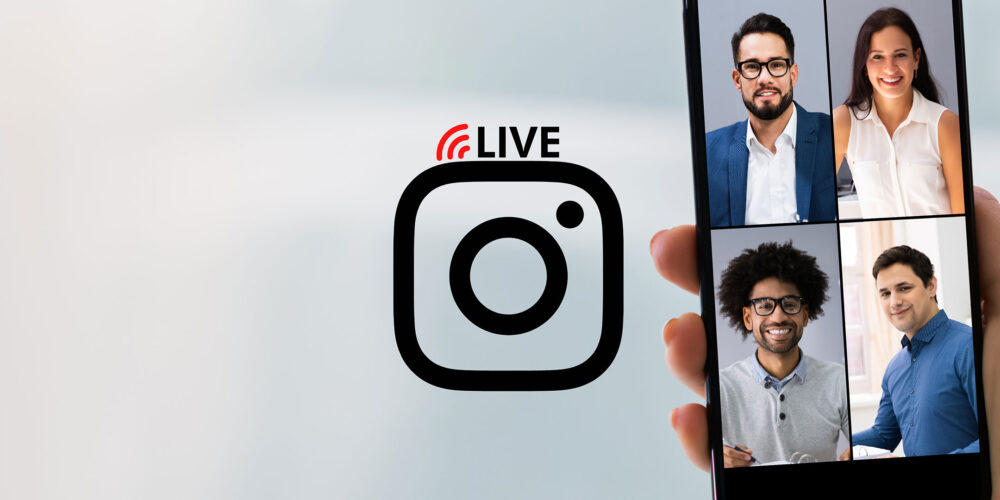
  • How to go live with up to four people on Instagram
  • What benefit this also brings for musicians
  • How to use Live Rooms in practice

Go live with up to four people at once? Thanks to the new Live Rooms feature, this will soon be possible on Instagram.

Instagram has announced a new feature that will go live soon. On the one hand, this is their response to the change in circumstances due to the pandemic. On the other hand, it is certainly also due to the pressure exerted by competitors like TikTok. IG Live Groups should also be a useful addition for musicians.

IG Live Rooms

The new feature allows multiple people to go live together. It is expected that four people will be able to be seen in a live video at the same time. All they have to do is accept the invitation.

In general, experts believe that live videos will become one of the most important social media trends of the year. With IG Live Videos, people now have another option.

How do I use IG Live Rooms?

IG Live Rooms is suitable for interviews or talk shows – podcasts with pictures, so to speak. It is also already foreseeable that the tool will be used to advertise products.

For bands, it’s also handy to be able to address fans together without effectively having to meet physically. Whether it is also suitable for virtual concerts remains to be seen, but it is doubtful.

Instagram has not yet announced an exact date for the launch of the new feature. However, it’s certainly worth considering how you can use the tool now so that you can get started as soon as it’s live.

Update: The feature has now gone live. You can find all further information here.