How to avoid that after the production the budget is already used up
How to find the multipliers to expand your reach
How to better manage your budget
Many artists work with a rather small budget. Our Head of Music and promotion expert Moris Marchionna explains how to plan it best so that there will be enough to promote your release.
It happens quite often that the budget is already used up when the album or single is finished. The money has been invested in the production, mix and mastering or the video, but there is hardly anything left for promotion. Our Head of Music and promotion expert Moris explains how to prevent this from happening.
“The biggest mistake is to believe that good music is automatically successful. If you don’t have the reach and the money to buy it, not many people will discover your music. No matter how good the music is. It’s therefore very important that you plan your budget wisely.
Moris Marchionna, Head of Music
First you have to set a precise goal, e.g. how to increase your range. The next step is to consistently cut everything out of your budget that doesn’t bring you closer to this goal.
A professional production is a basic requirement to generate more reach but not a guarantee for success. It’s certainly worthwhile to plan sufficient budget for the production. But is it necessary to have the most expensive mastering and the best studio and do your fans really notice the difference?
Ask yourself: Can you get a similar quality from another engineer or a less renowned studio? If so, you can already put something aside for your promotion.
Find the multipliers
If your primary goal is to generate more reach, you may not have the desired number of followers on your YouTube channel or Instagram. But with a small reach and no budget it’ll be very difficult to promote your video clip. Instead of spending e.g. 2,000 Euro for a video, you better look for a possibility to shoot the clip for 500 Euro. The remaining 1,500 Euro can be invested to promote the clip or in playlist and radio promotion.
“It’s important to find the multipliers that will help you reach your goal faster.
Moris Marchionna, Head of Music
If you have a good product and an exciting story, you have to build a network to distribute your music to the most important multipliers. These include YouTuber, Influencer on Instagram and TikTok, as well as traditional media and blogs.
First of all, make a list of the channels where you would like to be present. Don’t just rely on the big players, but also on smaller channels that reach your target audience. Come up with a good headline and summarize the story briefly and concisely. It’s important to build a long-term partnership. So always return the favor by marking them and spreading their posts.
As an iGroove customer we are happy to help you plan your promotion as well as your budget. Just sign up for a call with our promotion experts.
Samples are being used more than ever, and in a wide variety of genres
What are the most popular myths about sampling and are they actually true?
How you clear samples and what this costs roughly
Where to find legal samples at good prices
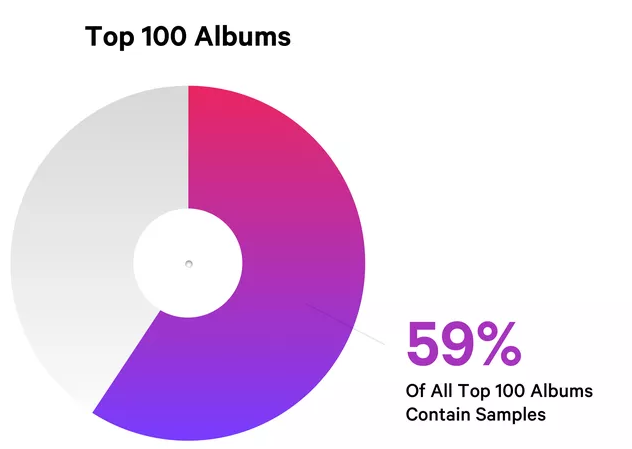
When it comes to sampling many people may only think of rap music from the 90s with samples from dusty jazz records. But sampling today is perhaps more popular and widespread than ever, largely due to many new possibilities. An analysis of Tracklib shows that in 2019 15% of all songs in the top 100 of the Billboard charts and even 59% of all top 100 albums contained samples.
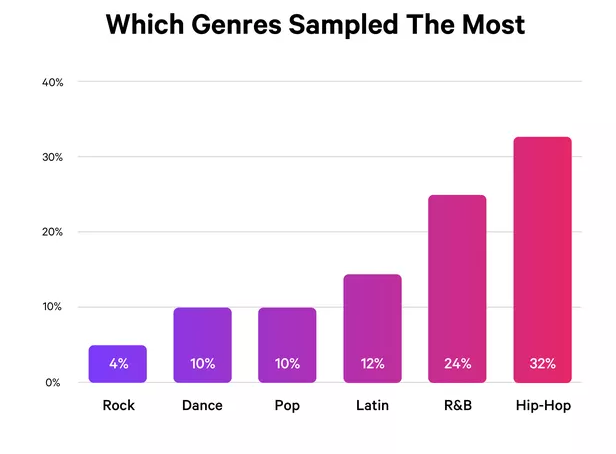
This is by no means limited to HipHop, but is also frequently used in R&B, Latin, Pop, Dance or even Rock music. Of the top producers in 2019, 83% said they had used samples during their career.
The art of sampling is widely used, but at the same time you can read that artists have been sued, albums have postponed or songs have not been released due to problems with sample clearing. We explain to you how it works.
Popular myths about sampling
There are numerous rumors around the topic, most of which are however simply wrong.
Sampling is allowed up to a certain length
Wrong: There are many incorrect reports that you may sample e.g. six seconds or 4 bars. There is no such regulation and the length of the sample is not relevant.
If I change the sample, I can use it
Wrong: Whether you use a loop, chop the sample, change the pitch or whatever, it still remains someone else’s intellectual property. Of course, you can argue about whether you really want to give money away when the original is no longer recognizable at all. But do you really want to go to court for that?
If I replay the sample, it is not a legal problem
Half-true: You actually only need one of two permissions. More on this a bit later.
How to clear samples
To be really on the safe side, you need two permissions:
Master Rights (usually from a label)
Rights to the composition (publisher or artist himself)
On the one hand you need the approval of those who have the master rights to a song, which in many cases is a label. On the other hand, the authors, i.e. lyricists and composers, must also agree that you use their work. These rights are often held by a publisher or otherwise directly by the artist. Unlike the cover of a song, the rights holders can forbid you to use a sample at any time.
The first step is to find out who actually owns the rights to the song you want to use. It is therefore very important that you write down which samples you used in a song, otherwise things will get even more complicated. If you buy beats on the internet, make sure you check with the producer whether he has used samples and if so, whether they have been cleared. If not, this can come back to you.
Who owns the master rights is usually relatively easy to find out, since it is usually the label that releases the song. In many cases this can be determined with a simple Google search.
It is a little more complicated to find out who worked on the composition and the lyrics and who represents them. If you are dealing with releases from the US, the databases of ASCAP or BMI are recommended. Apart from that there is nothing else but a lot of research.
If all of this is too complicated for you, you can also hire a company that specializes in sample clearing. But of course they will demand their share and it won’t be cheap in general.
What are the costs of Sample Clearing?
As soon as all the rights holders have been found, the negotiations begin. At least if one receives an answer to the inquiry at all, which is apparently not always the case with independent artists. Provided they like your song and give you the permission to release it, it will cost you something.
How much depends of course on various factors like the artists’ popularity.
A fixed advance payment is usually required both on the master side and from the composers. According to various reports, this is often between 2,000 and 10,000 dollars each. In addition, for the master rights one gives away about 3-10% of the income of the song. Even more usually goes to the composers, but it should not be more than 50%. If you cannot afford such a high advance payment, you can negotiate a higher participation. Of course it would also be possible to try to settle everything with an advance payment, but especially for independent artists this might be a big risk.
As you can see, it is complex and in many cases expensive to clear samples. The more obscure the sample source is, the more difficult it is to find the rights holders. And the better known the sampled artist, the more expensive it gets.
Let’s get back to the topic of replaying samples: In this case you don’t need the master rights, because you are not using the existing song to which the label has the rights. But you still need the permission of the composers, because you have used their intellectual property by playing their melody.
Does anyone really notice if I do not clear the song?
If you don’t clear the sample and your song only has a few thousand streams, it is almost certain that no one will notice. However, this can change very quickly if your song goes through the roof. Then the tactic of “just checking to see if I get caught” is anything but recommended. If the rights holders still want to negotiate, you are certainly in a worse negotiating position and will have to give up a lot of percentages. In the worst case, a lawsuit may even be filed and this can be expensive. Furthermore, your distributor is obliged to remove the release from the stores if you have used uncleared samples.
If you want to be on the safe side, it is worthwhile to get the rights to the samples. By the way, we are not only talking about music, this also applies to samples from movies, games etc..
How do I get legal samples without much effort and expense?
Of course the problem was identified already and there are several sites where you can easily get samples.
Tracklib: The site gives you the opportunity to sample a wide range of original songs and to clear them at fair conditions and above all with little effort. You also pay a monthly subscription fee. Many famous artists like J. Cole, Lil Wayne, DJ Khaled, Brockhampton or Mary J. Blige already used the service.
Splice: No original songs but royalty free samples, partly from world famous producers, are available at Splice. According to their own promotion they have millions of sounds from drums to vocals or different instruments. You pay a monthly amount as well.
There are also several other sites where you can download so-called Sample Packs or Royalty Free Samples. It is recommended to always study the conditions carefully, as these may not always be used for all purposes and unfortunately there are many less serious providers on the market.
Conclusion
Legally speaking, the situation is clear, a sample, no matter how short or alienated it is, must always be cleared. In reality it is an enormous effort and also a cost factor, especially for smaller independent artists. Often you are faced with the decision whether to take the risk or to work without the sample, even though the sample might be the element that makes your song a hit. In addition, it is certainly worthwhile to try out the numerous new alternatives.
What Kanye West criticized about the music industry on Twitter
Why these requirements are already met when working with an independent distributor
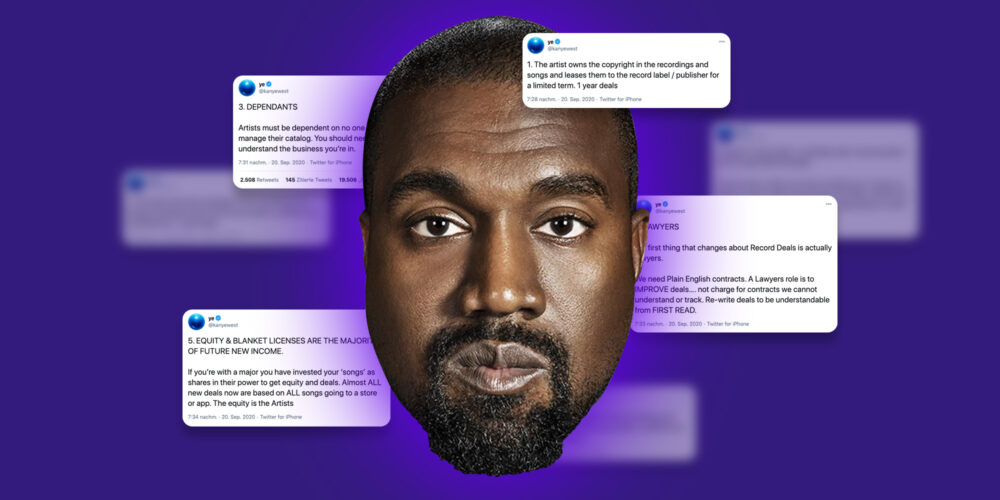
Recently Kanye West criticized the mechanisms of the music industry with several tweets. Using iGroove as an example, we will show you that many of these requirements are already met when working with an independent distributor.
1. The artist owns the copyright in the recordings and songs and leases them to the record label / publisher for a limited term. 1 year deals
2. The record label / publisher is a service provider that receives a share of the income for a limited term. The split can be 80/20 in the artists favor
With iGroove, you always keep the music rights, and you have the option to switch to another distributor at any time. There is no contractual obligation. You will not only receive 80% but 92% of the revenues.
Limited terms only exist for advance payments. The duration can be chosen by yourself and thanks to our ‘best deal guarantee’, you can switch immediately in case you find a better deal somewhere else.
3. DEPENDANTS
Artists must be dependent on no one but themselves to manage their catalog. You should need NO ONE else to understand the business you’re in.
the first thing that changes about Record Deals is actually lawyers.
We need Plain English contracts. A Lawyers role is to IMPROVE deals…. not charge for contracts we cannot understand or track. Re-write deals to be understandable from FIRST READ.
Even better: no contracts at all. At iGroove, you only need to accept the terms and conditions and – being musicians ourselves – you will understand them easily (no lawyers needed). All costs are transparent, and you only pay for what you need.
5. EQUITY & BLANKET LICENSES ARE THE MAJORITY OF FUTURE NEW INCOME.
If you’re with a major you have invested your ‘songs’ as shares in their power to get equity and deals. Almost ALL new deals now are based on ALL songs going to a store or app. The equity is the Artists
NO MORE blanket licenses. It should be clear from day one… what shares you get NOW and when you leave. If your song helps a deal over the line you invested in that store / app same as they did.
UMG now has a 2.2 billion share holding stake in Spotify. This is the artists. The system as to how we get share balances on our royalty statement needs to be created and a system on when Artists can cash in.
There is no exclusivity. This means at iGroove you can release some of your songs with us, but you can also release others through other distributors. You choose.
iGroove is a Spotify Gold Partner and does not have any side deals with Spotify. Neither do we have any middlemen involved. All revenues that are distributed to us by the DSPs get immediately passed on to the artists.
6. ROYALTIES
Again back to dependents. You need a business manager to read how you did? So you pay to see your money!!! NO MORE.
It sounds basic and logical but t does NOT exist. They focus on top earners and ZERO look at the 440 stores…. Only the top few. Artists are global. That’s why their contract territory says GLOBAL
Royalty department in EVERY label. No more separating finance teams from the music
Thanks to our sales trends and statements you always keep track of your income. You can see how much you earn per song, at which store and in which countries etc. With our app, you can check these figures any time while on the road. Further, you can see your estimated streaming revenues for the next 6, 12 and 14 months.
7. PORTALS
Are not just for royalties. They are for your entire business. Every audio file, every asset, every deal stored WITH the money. Money and Music must stay together. When your term ends, download it all. Leave.
In your iGroove account, you have everything in one place. From all your releases to statistics, payouts and services. If you took an advance payment, the contracts are stored there as well. All this information can be downloaded at any time.
5. ADVANCES ARE JUST LOANS!!
On Artists re-signing these stop. Advances are Loans with 75% interest rates (or worse). NO other business in the world takes a look at the business, buys shares, starts to profit when it profits. Record Companies have to buy into you, not loan you.
The difference between a loan versus an advance payment from iGroove is that a loan must always be fully repaid. However, with an advance payment, iGroove takes on the risk that the amount cannot be recouped. The conditions (duration & share iGroove) can be set by yourself and range from 1 to 3 years and 14% to 18%. Further you can select for which releases you want the advance (some backlog releases or a certain number of future releases). Again, you choose. All costs and margins for covering the risk that the advance does not recoup are calculated by iGroove’s AI and are completely transparent for you.
Kanye’s manager adds: “When you hear the stories of a musician who hasn’t paid his or her taxes or has gone broke, it’s because it takes so long to get your money. Some creators only get paid once every six months.“
With iGroove, you get a monthly credit, and you can pay this money out at any time. The billing transparently lists how much you have received from each store and shows the exact number of streams and downloads.
How to do everything from advances to your link site to support requests conveniently on the go
What comes next
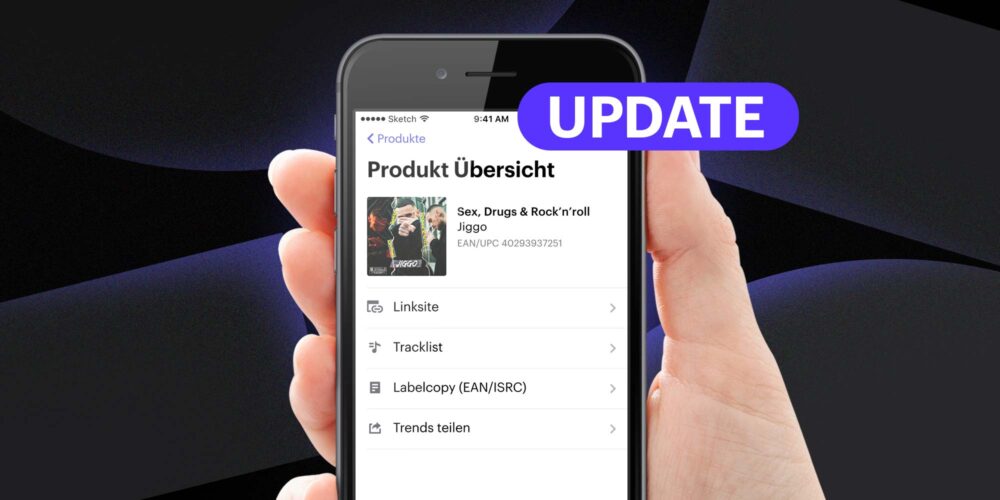
Earlier this year, we launched the iGroove app so you have the most important features of iGroove at your fingertips. You can find a description of the basic functions of the app here.
Now the first major update is online and thanks to additional functions it is now even easier to handle your business on the road. In this blog we’ll introduce you to the new features.
Advance contracts
You received an advance payment from iGroove? Congratulations! Now you can find all important information directly in the app. You can see which releases are part of the deal, which refunds have already been made and all other details about the advance. You can also download the advance contract as PDF.
Products
We have made various optimizations in the product section:
Now it is possible to download or send the label copy with all information about the release. This is especially useful for the registration with your collecting society.
You can now manage the link site easily via the app. With just a few clicks you can add or remove stores, customize links and even add your social media channels. Add all important links of the stores and your social media channels and promote your release.
Share the sales trends of your releases with your partners like band mates, managers or producers. You decide for which releases the partners get access.
More
New is the tab “More”, which replaces the previous menu item “Profile”. Beside the possibility to edit your profile, you’ll find the following:
Support Chat: You can now contact our support team directly via the app. So you are one step closer to the source and we can support you even better. Once we send you an answer to your question, you’ll receive a notification on your cell phone even if you haven’t opened the iGroove app.
Frequently Asked Questions (FAQ): You want to answer your own question right away? Here you will find the answers to the most common questions.
What’s next?
We are constantly working on the next update which will allow you to split the revenue of your releases among all participants. Additionally we will integrate the service reports – the evaluation of your booked services – directly into the app.
Do you have questions about the iGroove app?
Then contact our support at [email protected] or write us in the chat.
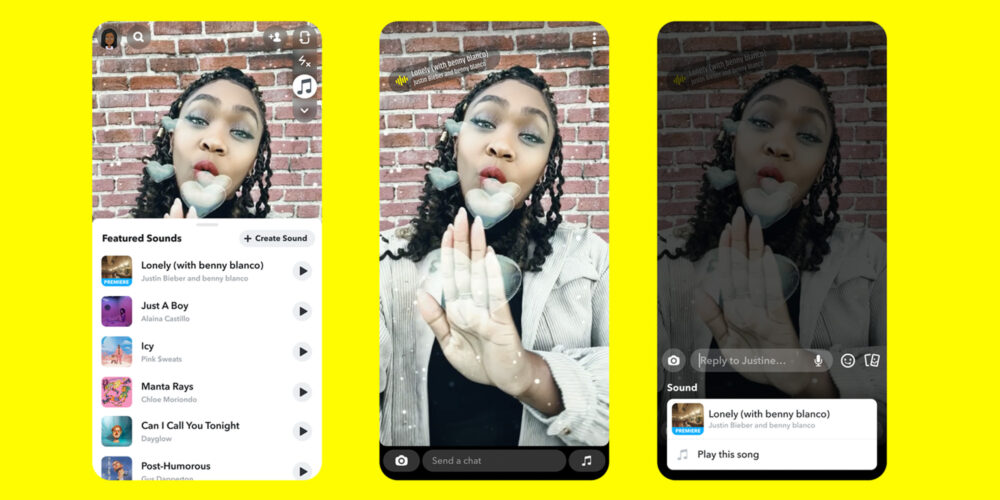
What is a standard feature on TikTok and Instagram was previously not possible on Snapchat: integrating licensed music. The app, which is particularly popular with a young audience, has now changed this. The simply titled “Sounds on Snapchat” feature is, however, only available for iOs users so far.
Just one click away
When someone includes a song in a Snap or their Story, a swipe-up reveals the artist name as well as the song title. Now click “Play this Song” and users can listen to the track on their preferred platform like Spotify, Apple Music or Soundcloud.
Snapchat sources music not only from major labels, but also from Merlin, which represents numerous independent distributors. Soon, it will also be possible for iGroove customers to make their releases available on Snapchat.
For musicians, “Sounds” offers another opportunity to generate additional streams and followers on streaming platforms. With 4 billion snaps being created every day, this is a reach that should not be underestimated.
How to monetize livestreams on the respective platforms
Most likely, Covid-19 will continue to accompany us for a while and accordingly it’ll take some time until as many concerts as before the pandemic take place again.
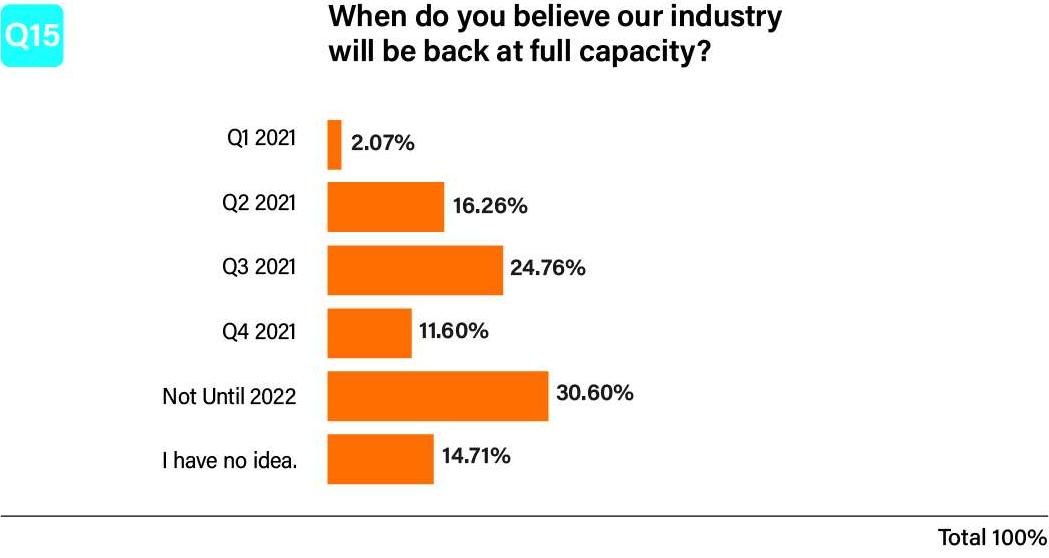
In a survey conducted by Pollstar, over 1,300 live music professionals gave their predictions of when concerts will be back in our daily lives. After all, more than half believe that full capacity will be reached again in 2021. However, only 2.07% believe that this will already be the case in the first quarter. 16.26% believe in the second quarter and a 24.76% of the respondents consider the third quarter realistic. But not everyone shares the optimism. Almost a third believe that we won’t be back at full capacity until 2022.
So it’ll probably be a long time before musicians can generate a significant part of their income from concerts, as they did before the crisis. One way to offer your fans live music nevertheless is through virtual concerts. And you can earn money with that, too.
There are two different ways:
Virtual events, where a ticket must be purchased in advance
Virtual events where fans can pay during the live stream
Let’s start with the most popular platforms:
Instagram
As we already reported, there is the possibility for the viewers to acquire so-called batches and give thus to the Creator as a “tip”.
The disadvantage is that this function hasn’t been activated yet in all countries and you must have at least 10,000 followers to use the function at all.
It’s also possible to allow ads on IGTV, on which the creators earn 55%. This is however so far only activated for selected accounts.
Facebook
This badges function has been available on Facebook for quite some time now, under the name “Stars”. But much more interesting is the possibility to create events, which are only available for a fee, which was launched in August. The user pays directly via the app and then gains access to the live event. Unfortunately this function is not yet activated in all countries.
YouTube
YouTube has built in quite high barriers to make money with livestreams. You have to apply for the YouTube affiliate program first. To be eligible for the program, you must have at least 1,000 subscribers and a minimum of 4,000 hours of play time in the last 12 months.
Afterwards, various monetization options are available. For these special conditions and minimum requirements apply once again.
Income from advertising
Paid channel memberships
Merchandising area
Super Chat and Super Sticker for live streams
Share of sales generated by YouTube premium users
This process can be bypassed by selling tickets for the virtual event on platforms such as Eventbrite, Bandsintown or Bandzoogle and then providing all buyers with a link to an unlisted YouTube stream.
TikTok
If you have at least 1,000 followers at TikTok, there is also the possibility for the users to give you a “tip” in the form of emojis. These are bought and credited with the TikTok currency Coins. As soon as you have Coins worth at least 100 Dollars, you can have them paid out.
Twitch
While Twitch used to be popular primarily in the gamer community, this platform bought up by Amazon is now also used intensively by musicians. Similar to the other platforms, users can transfer a “tip” in the form of bits to the musicians during their live streams, which they use to activate special emoticons and commentary functions. It’s also possible to stream only for paying subscribers of your channel.
Meanwhile it’s also possible to connect the live streams directly to your Amazon Music profile, so that the live streams can also be watched via Amazon Music.
Other platforms
There are various platforms that make it possible to sell tickets for virtual concerts and which also provide the necessary infrastructure. These are among others:
The platform Periscope, which belongs to Twitter, also offers a tip function where users can buy hearts and transfer them to the creators.
The TikTok competitor Triller launched a live stream feature in mid-October, which on the one hand allows users to subscribe only for a fee or then the possibility to tip the creators. 70% of the income goes directly to the artist.
For advanced users there are tools such as OBS Studio or Restream.io. OBS Studio gives you the ability to work with multiple cameras and different audio channels. With Restream.io it’s possible to go live simultaneously on different platforms like for example Facebook, YouTube and Twitch. It can also be combined with the benefits of OBS Studio.
Additional possibilities
Patreon: Even outside of times of crisis, this platform serves to provide support for artists directly through their fans. The fans pay a monthly fee and receive exclusive content from the artist in return. This can therefore be ideally enhanced by virtual concerts.
Of course there’s always the possibility to ask the fan community to transfer an amount via PayPal or similar platforms.
Conclusion
There’s clearly no lack of platforms which you can use to monetize your virtual concert. Each artist must now decide for himself which option makes the most sense for him. It’s advisable to use a platform where you already have many followers. But it’s also worth trying out new possibilities or to combine different ones.
If you don’t yet have a particularly large fan base, it’s questionable whether the focus should be on the monetization of virtual events. It’s more important to concentrate on staying in touch with your listeners and to win new fans through the live streams.
For artists with a large fanbase there’s undoubtedly the possibility of capturing at least part of the unusual concert income with virtual concerts. While Facebook, Instagram, YouTube and other social networking sites rarely offer more than a tip, selling tickets can be quite lucrative.
If you are asking a price, like for a normal concert, you have to make sure that the audio and video quality is excellent. While you might turn a blind eye to an Instagram live stream if the quality is not breathtaking, a paid virtual concert should offer your fans something high quality and unique.
Finally, you should not forget to promote your virtual show as if it were a regular concert.
More about virtual concerts?
Do you have any questions or do you know of other ways to make money with virtual concerts? Let us know via [email protected].
How to create an analysis of your future streaming revenues and what information is shown
Why this information is important for a musician's career planning
Why iGroove provides this information free of charge
At some point in your career as a musician you’ll have to make important financial decisions. For these career changing steps, you need as much reliable information as possible. If it is missing, there is for instance the risk that you make a wrong deal which will bind you for a long time.
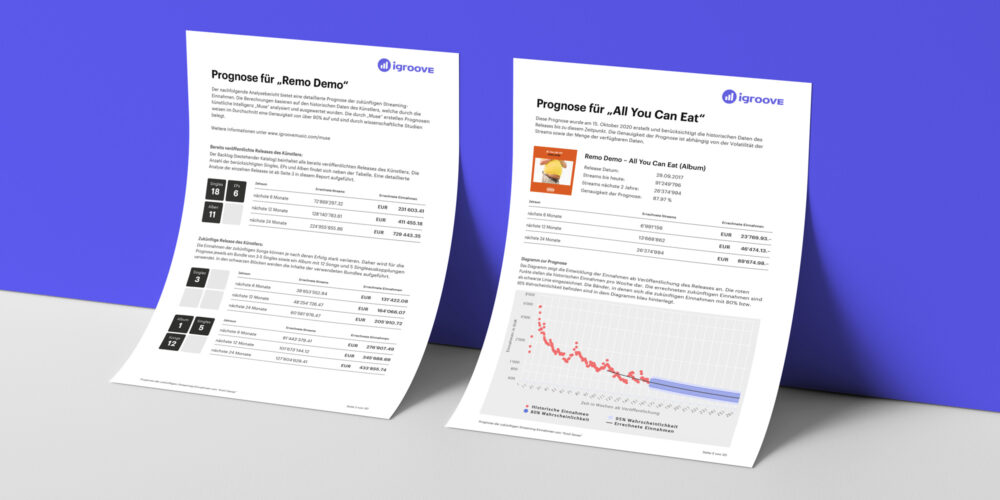
This is where ’Muse‘ comes into play. ’Muse‘ is an Artificial Intelligence created by iGroove that calculates the future streaming revenues of your releases.
Dennis Hausammann, CEO and Co-Founder of iGroove, explains:
“Originally, we developed ‘Muse’ to calculate the the highest possible advances that we can pay out to artists. It was only later that we realized how valuable this information is for the artists in itself. Therefore, we decided to make it freely available to them. Now every musician can see how much money he/she is likely to earn through music streaming in the next few years. This gives the artists more financial security and enables them to make better decisions. I think this is the most revolutionary thing iGroove has created so far”.
Analysis report for future streaming revenues
Here you can request a detailed analysis report, which lists your future streaming revenues.
Backlog:Here you can see how much you’ll earn with your already released music in the future.
Future releases: Since the streaming income of upcoming songs can vary a lot, there must be at least five singles and an album with at least 12 songs including 5 singles to make a reliable forecast.
Forecast per release: In the third section you’ll receive a separate, detailed forecast for each of your older releases.
In all three sections you can see how much you’ll earn with your music in the next 6, 12 and 24 months.
Similar to the calculation of the advance, anyone can have this analysis sent to them. Even if you are not an iGroove customer. For non iGroove customers we only need temporary access to the Spotify for Artists profile to have enough data for the calculation.
The calculation of future streaming revenues is unique in the music industry and it helps artists with important career decisions.
Understanding the financial situation: As a musician, you probably prefer to be in the studio rather than working with Excel spreadsheets on your computer. As long as the money comes in, a musician doesn’t constantly calculate and reevaluate his/her financial situation. Thanks to our analysis, this is no longer necessary: without having to make calculations, you get a reliable forecast of your future streaming income and can assess your situation.
Planning security: Knowing how much you’ll earn with your music in the next six, twelve or even in the next 48 months gives security and simplifies the financial planning of the next steps.
Basis for decision-making: Concrete and reliable figures are enormously helpful in making important decisions. For example, if you are unsure whether you want to rely entirely on your income from music revenues, the forecast can help you make this decision. You can also see how much is still missing and how much you need to generate in other fields (concerts, merchandise, etc.).
Negotiation basis: The knowledge of future streaming revenues helps in negotiations with labels and distributors or in deciding whether an advance is actually needed.
Why does iGroove provide these numbers free of charge?
iGroove was founded with the purpose to help as many musicians as possible to increase their income so that they can live from their art. Thanks to the forecasts, we now know if this goal has already been reached or how much is still missing.
Another cornerstone of iGroove’s philosophy is transparency. We are doing well when our artists are doing well. That’s why we only want to offer services that are effective. You can only decide which services currently make sense to you if you know your financial situation. Disclosing your predicted future streaming revenues to you should help you to make better decisions for your career.
What’s next?
As a further development of the analysis report, iGroove will release an app where you can check the forecasts for your releases at any given time. The future streaming revenues of your releases will be recalculated every night on the latest trend data. Additionally, we’ll offer you a preview of your next payouts. Since the stores have different payment schedules, it’s sometimes difficult to predict which part of the sales trends will be paid out when.
In a first step the app will be available for iGroove customers only, in a later version it will be available for everyone.
Do you have any questions about our analysis report?
Twitch videos can now be added directly to the Amazon Music profile
How to set this up
What the advantages of this integration of Twitch are
Livestreaming has enjoyed increased popularity for a number of years and has received another huge boost from the quarantine. One of the most important livestreaming platforms is Twitch, which was bought up by Amazon in 2014.
From now on, it is now possible to add your Twitch videos directly to your Amazon Music profile. Thus, it is the first time that livestreaming is directly integrated with a music streaming service.
The prerequisite is that you have verified your profile via Amazon Music for Artists. Now you can simply add your Twitch channel via Amazon Music for Artists under “Profiles & Tools”.
Now when you go live on Twitch, the video will automatically show up on your Amazon Music profile as well. Also, anything you post on Twitch will automatically be added to your Amazon Music profile.
If you’re a musician using both Twitch and Amazon Music, this new feature brings some benefits:
All your followers, fans, and superfans on Amazon Music will automatically receive a push notification when you go live on Twitch.
The active livestreams are visible on the artist profile and in the live category of the search box.
The Twitch dashboard now lists how many of the viewers came through Amazon Music.
Twitch is much more than a temporary replacement for canceled concerts, but another important tool to connect with his fans. In addition, it also gives you the opportunity to monetize your livestreams through subscriptions and donations from viewers. If you already use Twitch, you should now immediately couple it with Amazon Music to reach more fans.
Once again, we have collected a large amount of data based on the streaming numbers of the iGroove customers. Similar to Spotify there’s not a single amount per stream but various. The difference between the different countries are big although the gap is not as wide as on Spotify.
What causes the fluctuations in streaming payouts?
A big difference between the two giants is certainly that Apple Music doesn’t offer a free service. Exceptions are free trial months and special offers. With these, the PPS (Pay Per Stream) is much lower than with regular subscriptions and sometimes there’s no payout to the artists at all. If these trial months and offers were excluded, the PPS at Apple Music would be even higher.
At Apple Music, the differences are mainly due to the cost of the subscription. While in Turkey you can listen to Apple Music for the equivalent of 1.90 USD for one month, in Denmark you pay almost 16 USD.
In addition, the PPS differs enormously among the various subscription types. Streams from a normal subscription in Germany generate 9,780 USD per million streams. With a family subscription it’s only 5,025 USD. As mentioned, the payments are even lower in the test months or for special promotions.
Since fewer factors influence the PPS at Apple Music, the differences between countries are not quite as massive. The front-runner Norway surpasses the other countries by a maximum of six times, with the exceptions of Nigeria, Kazakhstan, India and Russia.
Let’s compare the 20 most important music markets according to IFPI (South Korea, Brazil and Argentina are missing on the list). You can already see the massive differences between the countries. While in India you get 2,303 USD for one million streams, in Norway, Denmark and Sweden it’s more than 12,000 USD. In the 17 most important music markets, one receives an average of 8,924 USD for one million streams.
Country
Per Million Streams
Costs Subscription
Norway
15,875
11.3
Denmark
13,186
15.85
Sweden
12,363
11.46
UK
11,513
13.33
Switzerland
11,294
14.27
Italy
10,670
11.91
Japan
9,259
9.26
Spain
9,329
11.91
Netherlands
10,655
11.91
Australia
8,259
8.83
France
7,801
11.91
Germany
7,002
11.91
China
6,125
1.45
Canada
5,438
7.64
USA
7,640
9.99
Mexico
2,999
4.53
India
2,303
1.35
How much does Apple Music pay per stream?
Like Spotify, Apple Music keeps 30% of the revenues for itself and pays out a share of the remaining 70% to the authors. The remaining amount goes to the rights holders via label or distribution.
Apple Music pays the artists according to a so-called pro-rata system. This means that all generated revenues are put into one pot (or into many pots depending on the country and subscription model) and then divided on a percentage basis according to the streams generated. If Apple Music has made 100 million in one month and you have generated 1% of all streams, you will get 1 million.
Assuming that one would have the same number of streams in each of the 50 countries evaluated, one would receive 6,872 USD for one million streams. This is just a little less of the amount Apple Music pays for streams from Germany (7,002 USD). As with Spotify, there are significant differences between the English-speaking countries: In the UK you get over 11,500 USD for one million streams, in New Zealand 9,239, in Australia 8,259, in Canada 5,438 and in the USA 7,640. Which means that you get 1,5 times as much in the UK than in the US.
In terms of PPS and population size the most interesting markets are the UK, Germany, France, Japan, Australia and the USA. Unlike Spotify, Italy, Portugal and Spain are also very interesting. One should also not despise the Benelux countries, Switzerland, Austria and especially the Scandinavian countries, which top the list.
Apple Music vs. Spotify
It is no secret that Apple Music pays significantly more per stream than its Swedish competitor. Thanks to our evaluation you can now see how big the difference really is.
Calculated on average for all countries, Apple Music pays 2.88 times as much per stream as Spotify. While the factor in the home market USA is 2.16, it’s almost 5 in southern European countries such as Greece. In Portugal even at an incredible 5.77.
In the list below you can see how much you get for one million streams in 50 different countries. You can also compare the numbers from Apple Music directly with those from Spotify. The factor shows how much more you get per stream at Apple Music. Finally, you can see how much the subscription costs for the two stores in the respective country.
Legend: For streams from Germany you get 7,002 USD for one million streams at Apple Music and 3,367 USD at Spotify. Per stream you get 2,08 times as much at Apple Music. If an artist generates practically only streams from Germany, he needs about 1.18 million Spotify streams to earn 4,000 USD per month, while 571,000 streams are already sufficient for Apple Music.
For the consumer it hardly matters which service he chooses, as the subscription prices are roughly identical. As a musician, however, you benefit much more from Apple Music.
New tools on Instagram: Everything you need to know about Reels and Badges
3 min read
|
1. September 2020
What you'll learn in this post:
What Reels are and how to use them
How Badges work and how to earn money with them
Two new tools that are relevant for musicians have recently been released by Facebook. The newest possibilities on Instagram are presented here.
Instagram Reels
TikTok is on the rise worldwide and can probably only be stopped by President Trump. But the competition never sleeps, and now Instagram has launched a new tool – Instagram Reels.
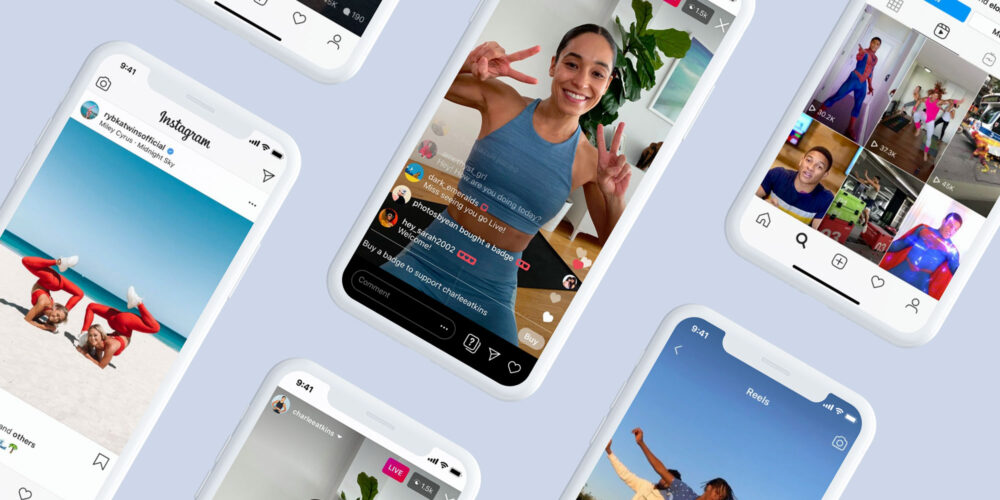
Similar to TikTok, you can create entertaining 15-second videos, work with various effects and tools and of course insert music. You can find this new feature when you open the Instagram camera.
Once you’ve delivered your releases to Facebook / Instagram via iGroove, your songs can be found in the Audio Library and added to Reels. Unlike Instagram Stories, the music can be changed and it’s possible to adjust the speed of the song.
The video can be edited with over 1,000 effects, but it is not possible to insert links. Also there is no possibility to promote Reels additionally – at least at the moment.
When posting you can decide whether you want to share it only in your feed or also via the new function in the discover tab. If you want to reach as many people as possible, it’s recommended to use both. Reels can also be posted as story, but then they’ll disappear after one day as usual. There is also a new Reels tab on your profile.
Badges on Instagram work similar to the “Stars” on Facebook. The users get the opportunity to give the creator a “tip” in the form of badges during live streams. From the musician’s point of view, this is another possible source of income.
In order to have the possibility to receive these badges, you must have at least 10,000 followers. In addition, the tool is currently only available for creators from the following countries:
Germany
USA
UK
Brazil
France
Italy
Turkey
Spain
Mexico
India
Australia
Japan
What’s next? Music videos on Facebook
Also in 2020, music videos are an important tool to promote a release. With the latest feature you now have a new possibility to spread your music video as wide as possible. In the Facebook Watch area there will be a new category for music clips.
So far the music video function is only available in the US. We will inform you as soon as this feature is also available in Europe.
Users will not only be able to search for videos, the clips will also be sorted by genre, artist and mood and there’ll also be curated playlists. Similar to the streaming providers, Faceook will create playlists like “Popular This Week” or “New This Week”.
The Artist Pages will also be adjusted and the music videos will be available there as well. The users will also have the possibility to follow an artist page directly through the video. The video’s can help artists to gain more followers. If a user follows an artist, he will be informed as soon as the artist has published a new video.
In Creator Studio you’ll have the possibility to manage and promote the videos and you’ll also see how they perform.
Do you have any questions about Instagram Reels or Badges?
Then contact our support at [email protected] or write us in the chat.
Why there are steady fluctuations in streaming payouts
Find out how much is paid out for one million streams from 79 countries
Why the difference between countries is so enormous
In the past, it was quite easy to calculate how much you earn from a sale. It was pretty clear how much you get per sold CD or vinyl record you sold and also with the downloads it was predictable what you earn per song. But in the streaming age the whole story has become much more complicated. Even though there are various figures on the web about how much Spotify pays per stream, there is no such thing as one fixed amount.
Therefore it’ s not surprising that we receive many questions from artists, why there are fluctuations in their streaming revenues. We have collected and analyzed a huge amount of data to give you a detailed insight into how Spotify pays you. Important: we only analyzed the numbers of Spotify. The other streaming providers work with different calculation models.
As mentioned, there is not one single amount Spotify pays per stream, but countless different ones. This depends on many factors, but mainly on which country the stream comes from and whether the listener has a free or premium subscription.
If we compare 18 of the world’s 20 most important music markets according to IFPI (China and South Korea are not on the list because Spotify is not available there), we see that the values vary enormously. The payout for one million streams ranges from 850 USD in Argentina to 5,479 USD in Norway. On average, you get 3,222 USD for one million streams in the 18 most important music markets.
Country
Pay Per Stream
Per Million Streams
Costs Premium Subscription
Norway
0.005479273262
5479.27
12.01
Denmark
0.005159208727
5159.21
15.65
UK
0.004912438819
4912.44
12.88
Switzerland
0.004735907468
4735.91
14.12
Sweden
0.004440795157
4440.80
11.33
Australia
0.003964816365
3964.82
8.58
Netherlands
0.003627001999
3627.00
11.75
Japan
0.003549137869
3549.138
9.32
USA
0.003526648542
3526.65
9.99
Germany
0.003367393910
3367.39
11.75
France
0.003165156140
3165.16
11.75
Canada
0.002738648734
2738.65
7.49
Spain
0.002351294930
2351.29
11.75
Italy
0.001993518049
1993.52
11.75
Mexico
0.001441136576
1441.14
4.49
India
0.001408341455
1408.34
1.60
Brazil
0.001294613594
1294.61
3.26
Argentina
0.000850040231
850.04
1.94
What causes the fluctuations in streaming payouts?
One of the most important factors is the subscription price. In India, for example, a Spotify Premium subscription costs only a fraction of what you pay in Denmark. While a premium subscription in Denmark costs the equivalent of 15.65 USD, a premium user in India only has to pay 1.60 USD per month.
Also, the advertising revenues vary between markets and of course they also vary from month to month in each individual market. At the same time, the number of premium subscriptions and the number of streams generated by the listeners changes every month. In short, the numbers are in constant change and so is the payout to the artists.
This means that it doesn’t only depend on the changes in your personal streaming numbers, but also how the “market” changes in general. If the number of your streams decreases but also the total number of all streams drops equally, you still earn the same amount. Overstated, you earn the same amount for 5,000 streams at a PPS (Pay Per Stream) of 0.001 as for a single stream at a PPS of 5 USD. It’ also possible that you generate more streams, but the PPS decreases and you still don’t earn more.
Here are the most important factors that influence how much you get per stream:
Subscription price
Subscription type (Free / Paid)
Origin of the stream (country)
Advertising revenue generated in the respective market
Number of subscriptions
Number of streams generated per month
How much does Spotify pay per stream?
Spotify keeps 30% of all revenues generated. Of the remaining 70%, a part is paid for the songwriters and composers and the rest goes via label or distribution to the rights holders of the song.
From the remaining share it’s calculated how many streams there were in total and how high the share of each artist is. Assuming there were one million streams per month and you have achieved 1,000 streams, you will receive 0.01%.
So far, so good. But it’ s not that there is only one cake, there are dozens of them. So there’s one cake for every market, every subscription level, and so on. This is where the (big) differences start.
We have analyzed our extensive data material and calculated how much you earn per stream in the different countries where Spotify is available. Not yet included are the Balkans, as Spotify was only recently launched there.
79 countries in comparison (click on the graphic for full view)
In the table (at the bottom of the blog) you can see for 79 different countries how much is paid per stream and extrapolated to one million streams. As already mentioned, there can always be fluctuations, but these figures give you a good guideline.
You can see, for example, that for one million streams in Iceland you get almost nine times what is paid for the same number of streams in Morocco, Tunisia or Algeria. Assuming you had the same number of streams in each of the 79 countries, this would give you a PPS of 0.00203111. So for one million streams you would get 2,389.58 USD, which is about the same as in Uruguay or Spain. Many European countries such as Italy, Greece, Portugal, the Czech Republic, Hungary or Poland are below this average, in some cases even significantly.
But even in the English-speaking countries the figures vary considerably. While you get 4,912 USD per million streams in the UK or even 4,977 USD in New Zealand, the figure is 3,964 USD in Australia, only about 3,525 USD in the USA and even only 2,738 USD in Canada.
Summary
The evaluation clearly shows that it’ s not only important how many streams you generate, but also in which countries. For example, Iceland is by far the country with the best payoff, but with its less than 400,000 inhabitants the island state is still only moderately interesting. Countries with a large population like India or Mexico are of course attractive because of their size, but you have to generate multiple times as many streams as for example in the UK. If you consider not only the payout per stream but also the number of inhabitants, the most interesting markets are the UK, Australia, Japan, USA, Germany and France. This is no surprise, but our analysis also shows that the Scandinavian markets should not be forgotten and countries such as the Netherlands, New Zealand, Switzerland and Austria should not be ignored. On the other hand, if you have your core audience in Turkey, the North African states or even the Latin American countries, you have to make a double or triple effort.
Exclusive insight into the backend – Discover iGroove with a demo account
2.5 min read
|
9. July 2020
What you'll learn in this post:
Discover the easiest and most transparent backend for musicians with a demo account
Our tour introduces you to the different functions
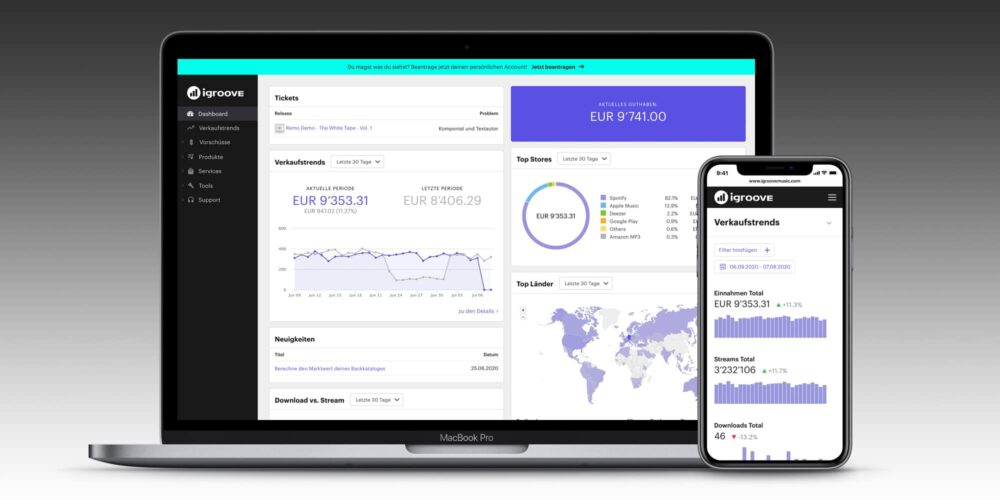
We regularly receive feedback from our customers that iGroove has the clearest, most transparent and visually appealing backend on the market. This makes us especially proud, since we develop our software and all tools ourselves. With weekly updates we also make sure that the portal is constantly evolving and that you always benefit from the latest technologies.
Unfortunately, so far only those who are already iGroove customers have been able to see this for themselves. In order to give everyone the chance to get an idea before applying to iGroove, we have set up a demo account to try out the iGroove backend.
Simply use the following link to discover the advantages of iGroove.
Tour
To familiarize you with the features and capabilities of the iGroove backend, we will briefly introduce you to the most important functions on this tour.
Dashboard
The individual dashboard
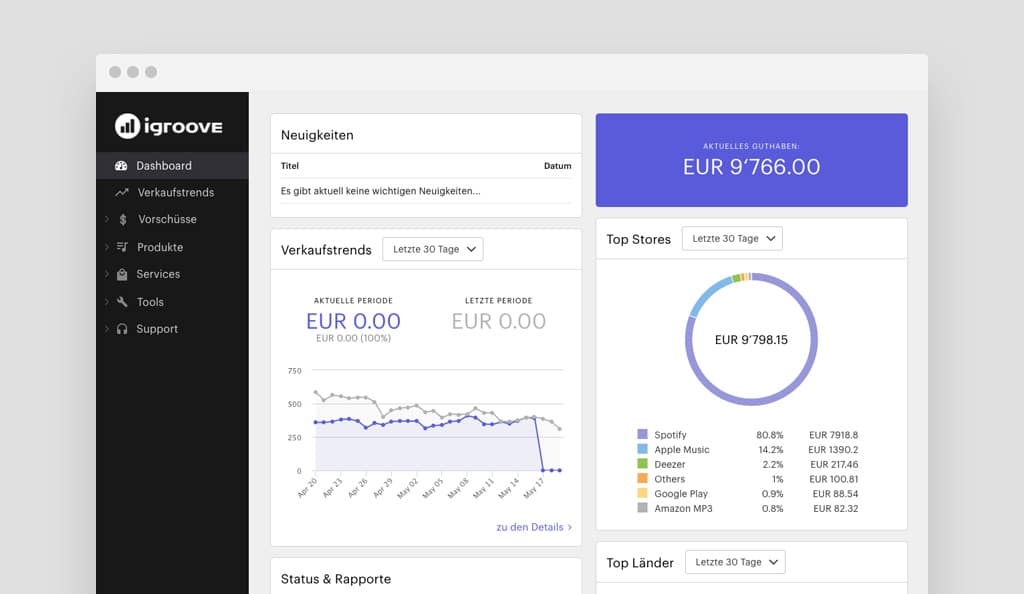
Whenever you log in to iGroove, the first thing you see is the dashboard. Here you get a good overview of your trends and sales, top releases, pending releases and other open tasks. You can define what information is displayed on the dashboard and arrange it according to your own preferences.
Trends
The detailed sales trends
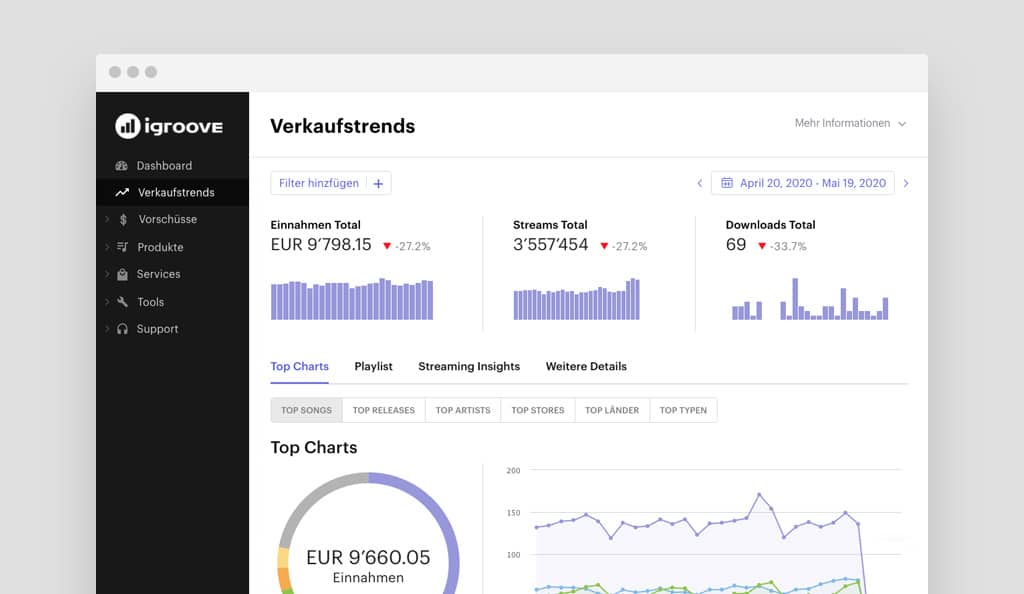
The sales trends show you today what you will earn tomorrow. With a delay of about two days your streams and downloads will be shown here. To analyse your data, you can sort them by release, song, shop, country, artist, period or type of revenue. These filters can be combined as you like. Pie charts and time history views show you how your numbers have changed over time. You can also see which playlists your songs are in.
Balance
At some point, your streams and downloads are no longer just trends, but become your credit. In this section you’ll see all movements on your iGroove account, get all the details about the credits and of course you can cash out your balance at any time (well, not on the demo account unfortunately). You can also download all details of the credited streams and downloads as CSV.
Advances
iGroove not only provides advance payments for future releases, but also for the back catalogue. In this section you can find all advance contracts and you can also see how much of the advance has already been recouped – listed in detail by release.
Products
All uploaded products
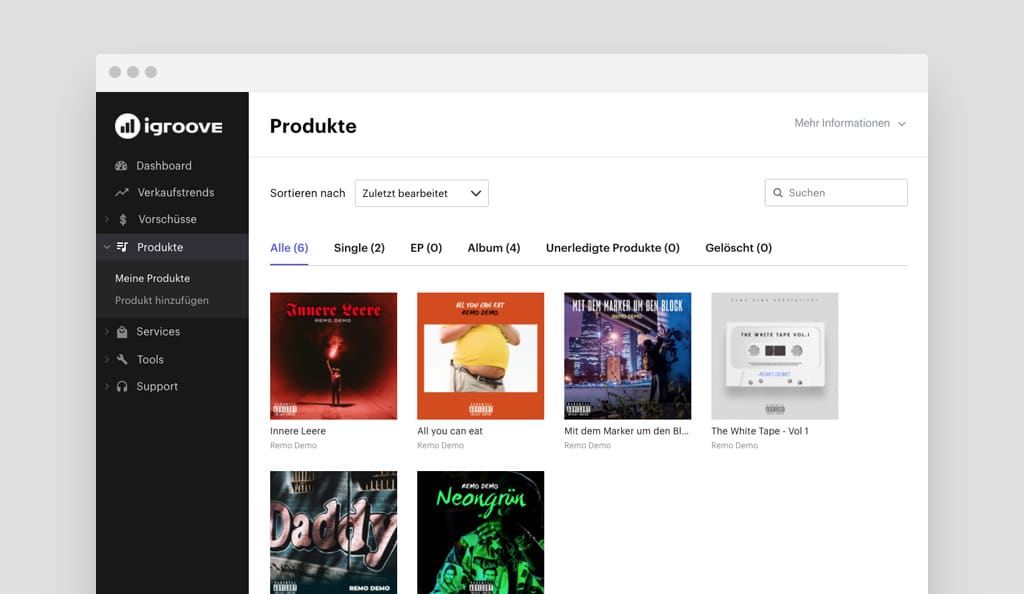
Here you can see all the products you have registered and you can see at a glance to which shops and when they were delivered. Pre-sales and pre-saves are also listed here. Of course you can also enter a new release in just a few steps.
Services
Many useful services for marketing & promotion of your music
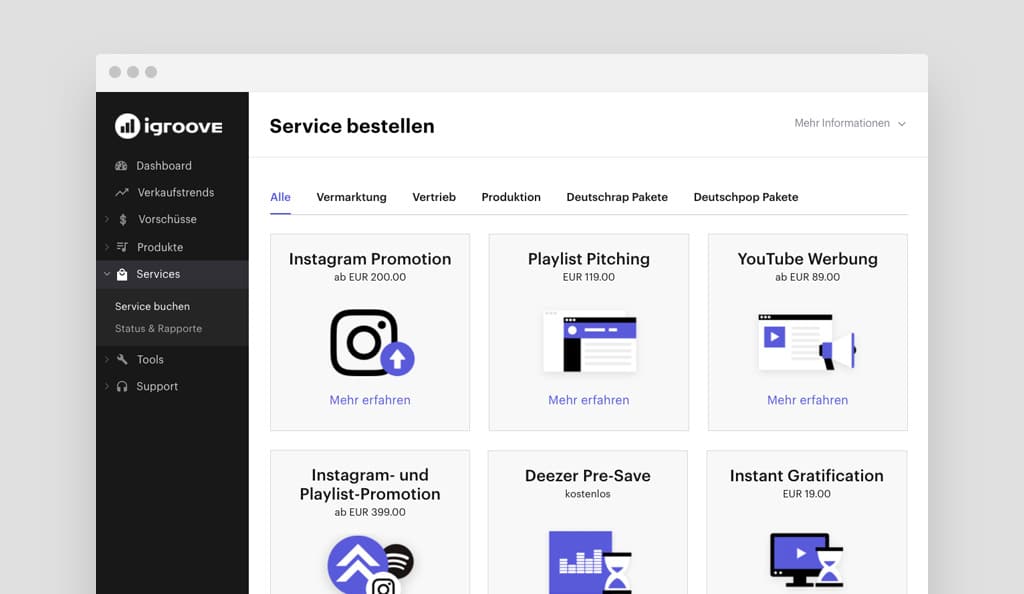
In this section you can not only book all our services, from Instagram- and streaming promotion, playlist pitching and YouTube advertising to various promotion packages. You also get detailed status reports and evaluations of the booked services.
Tools
iGroove offers you a variety of self-developed tools for free. Whether it’s the handy link site to promote your release, the PR page or direct access to Spotify for Artists, you’ll find everything at a glance.
Profile
In addition to the usual customizations like profile information or language, you can also see all the invoices you have received from iGroove.
Do you have any questions about iGroove?
At least as often as for our backend we are praised for our support. If you have any questions, please contact us at [email protected] or write us in the chat. Did this tour convince you? Then apply for an account with iGroove here.


 2.5 min read